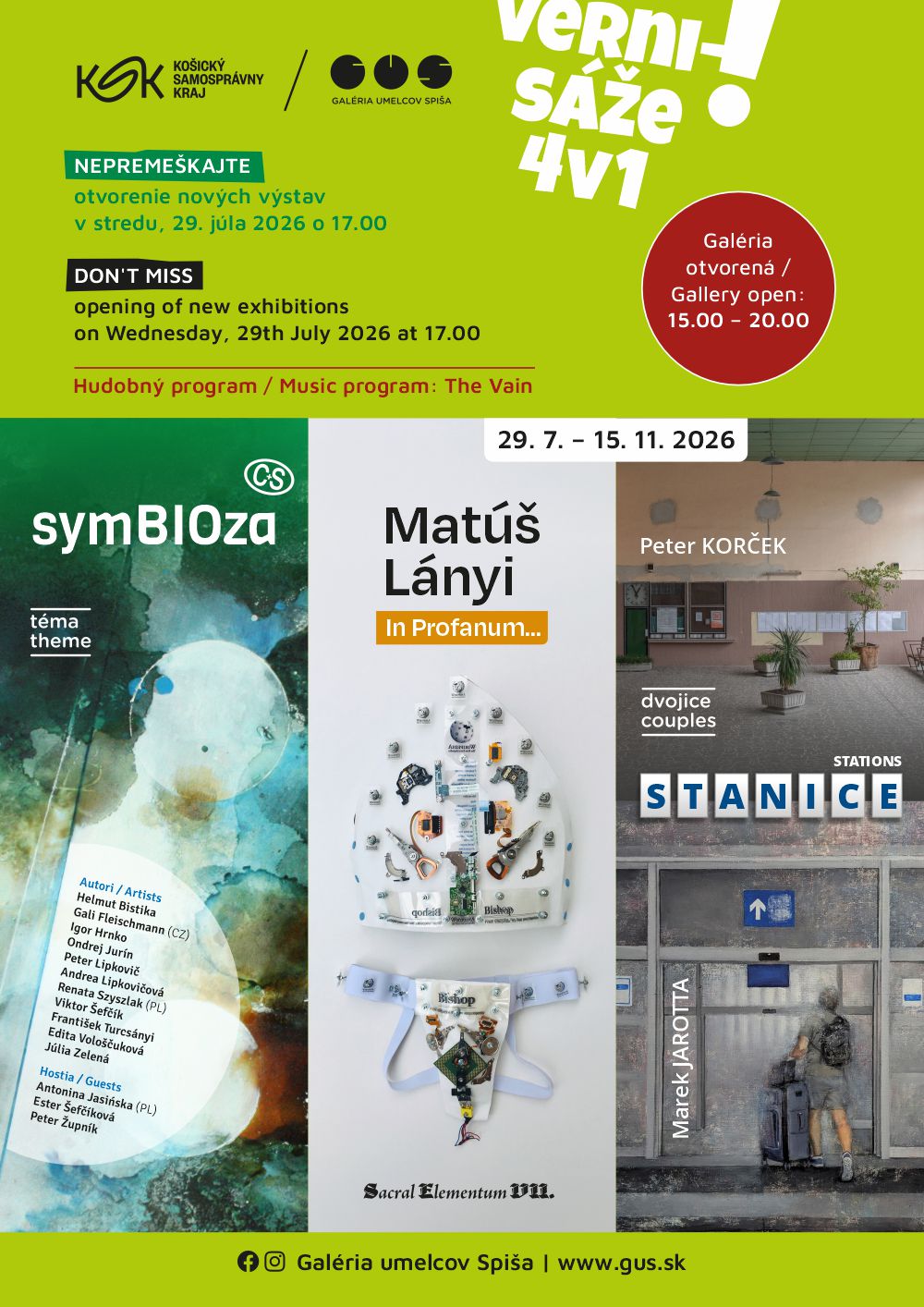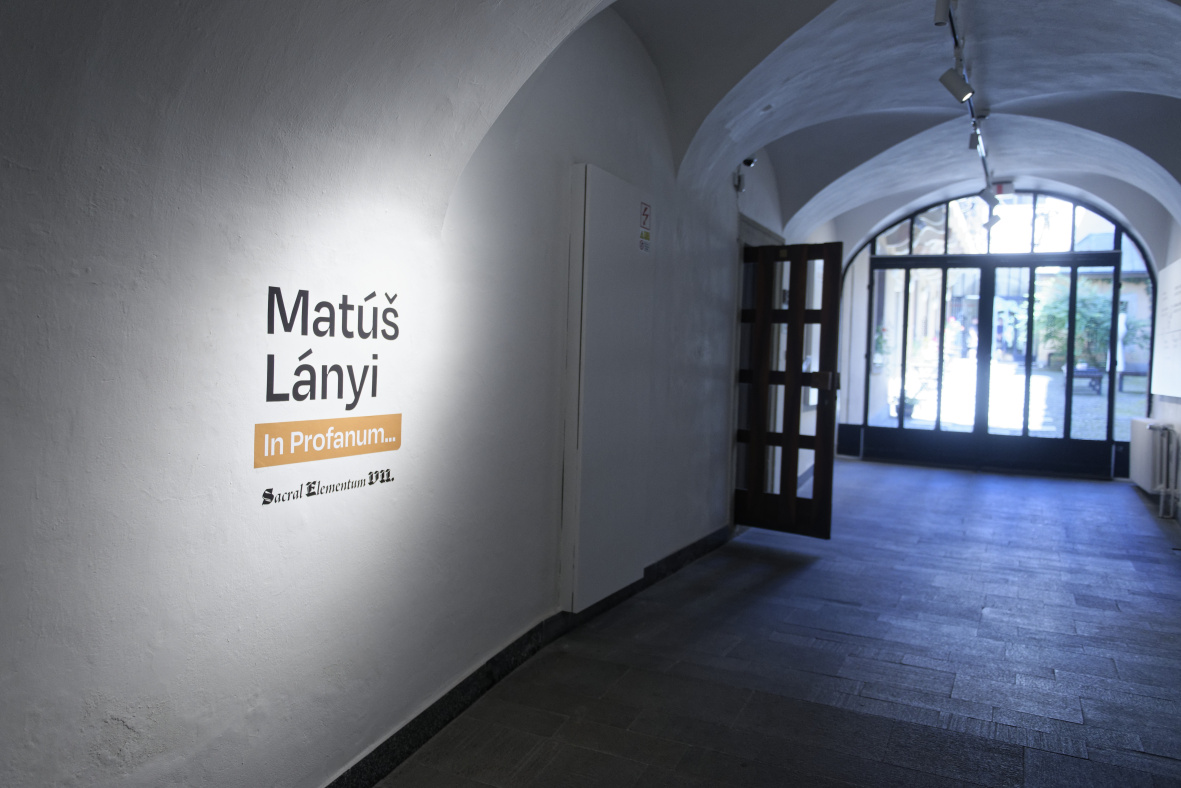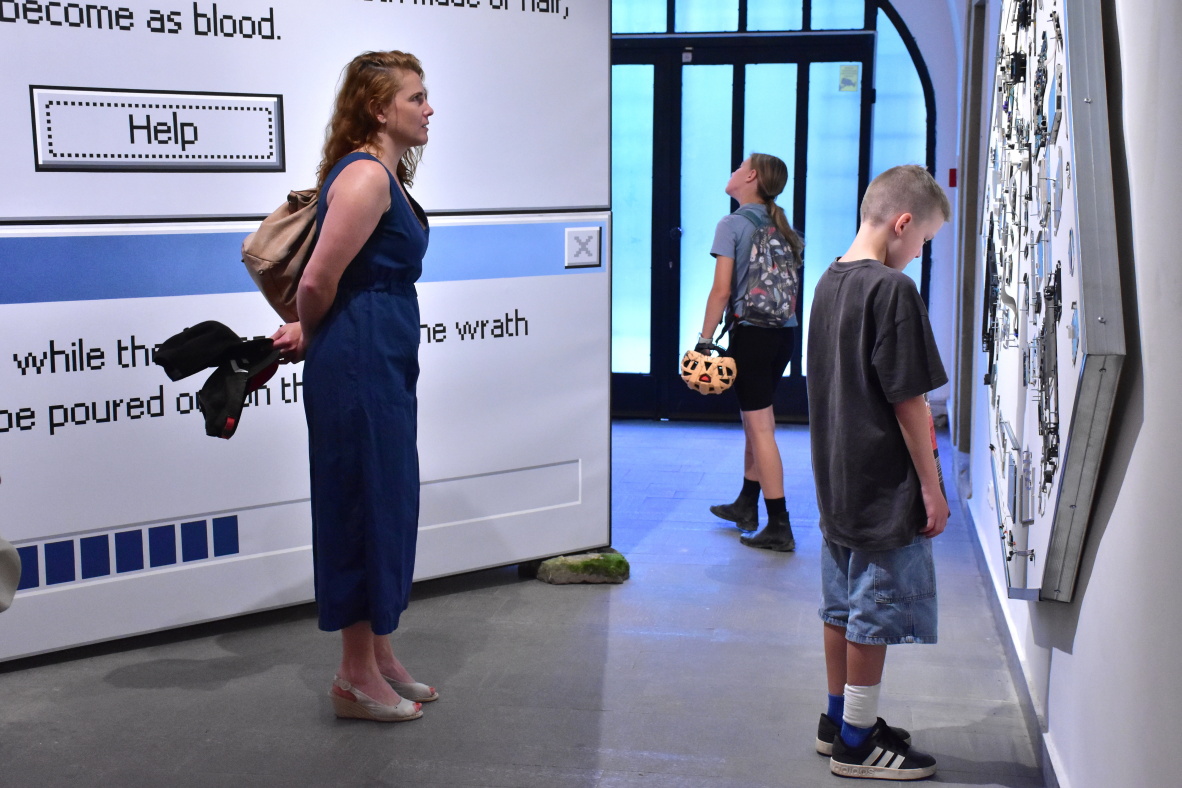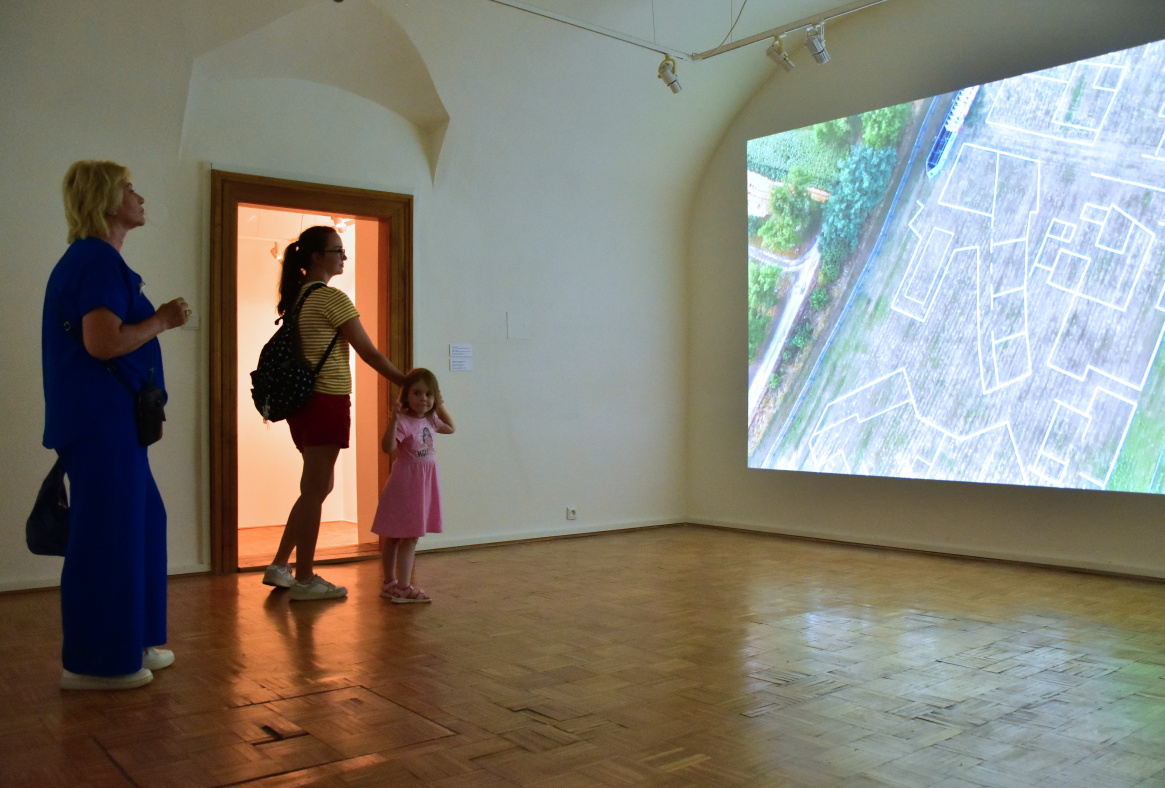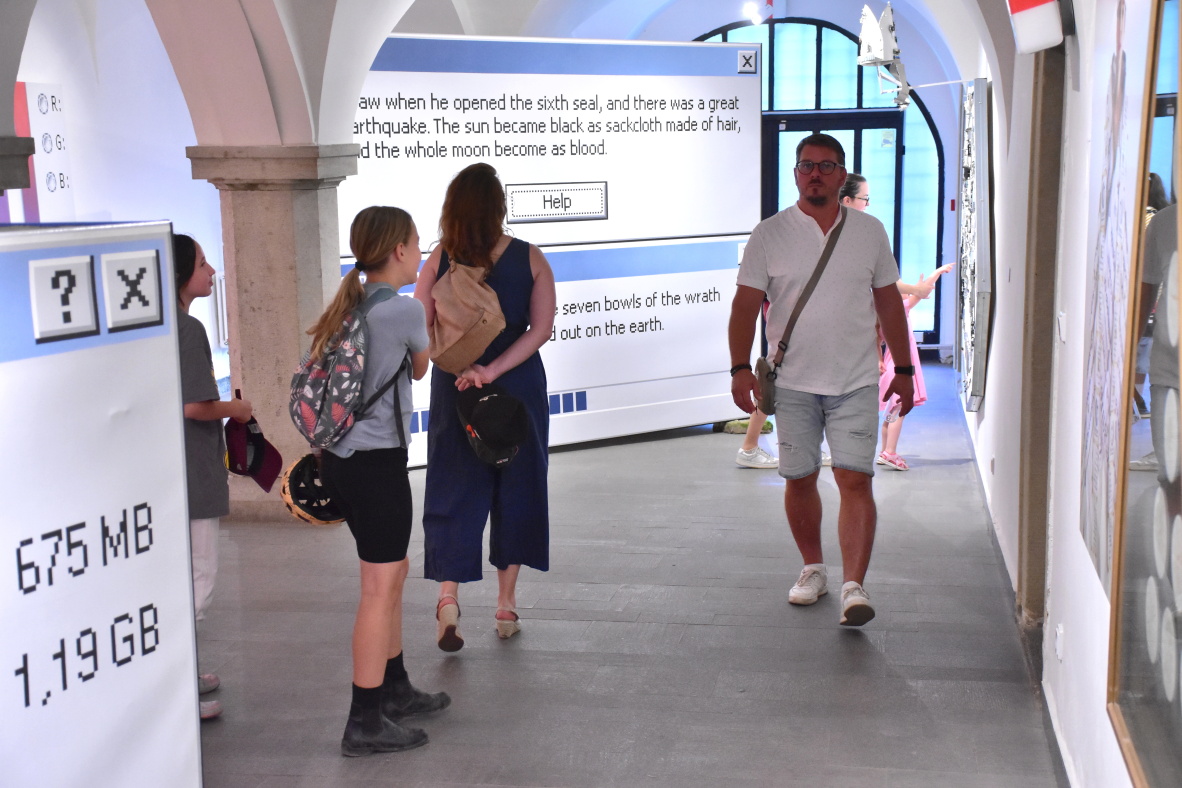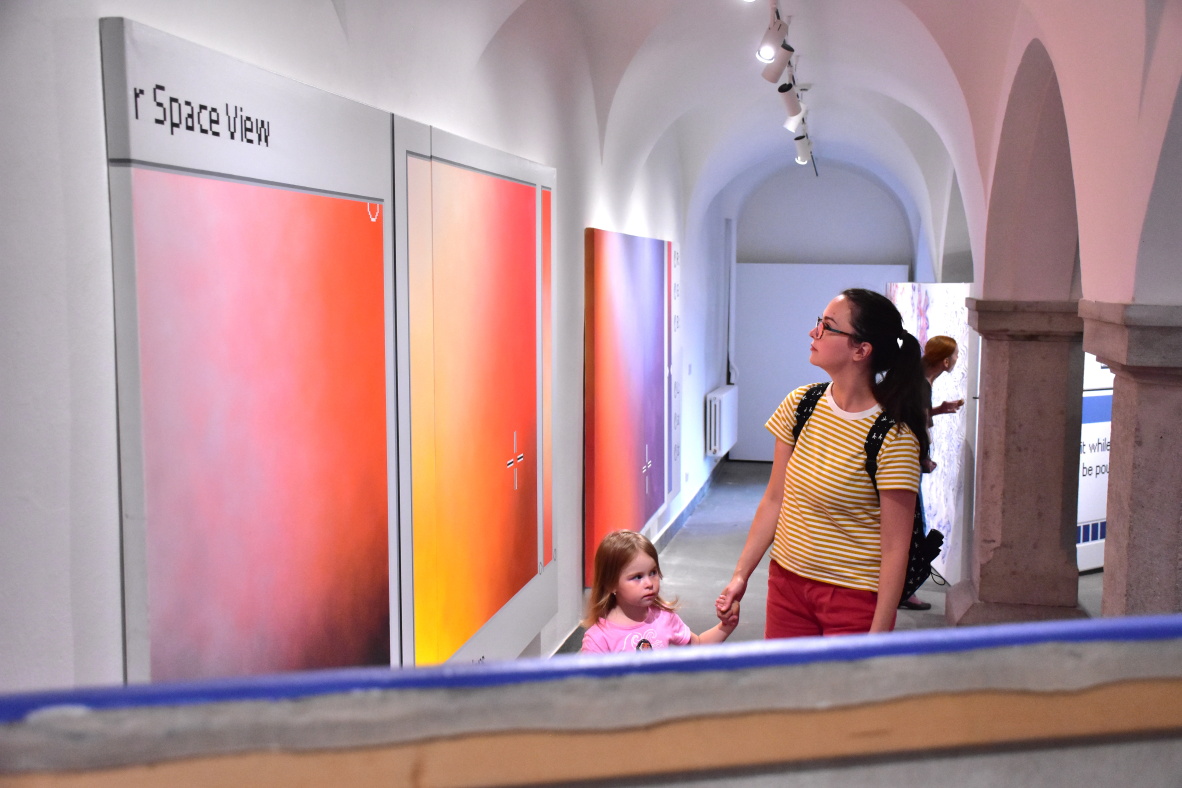
The exhibition offers an artist’s perception of the ongoing discourse on the phenomenon of digital religion or the mythological potential of the ways and means of the cybernetic space. Through his work, the artist explores some possible approaches to this remarkable phenomenon. Part of the Sacral Elementum cycle of exhibitions.
_____
The work of Matúš Lányi straddles the borders between painting, conceptual art, video and interspatial interventions. Applying contemporary visual means to probe the relationship between the sacred and profane, he offers his own unique interpretation of the intersections between the eras of religion and science. Lányi draws upon a rich legacy of sacral art, both local and from a wider European context, but this is by no means a traditional interpretation of these themes. He instead explores the iconographical elements of classical religion, contrasting them with digital phenomena, using iconographic language to formulate symbolic reflections on a new form of miracle which has been revealed to us as we struggle amidst the rapidly increasing digitalisation of our lives.
_____
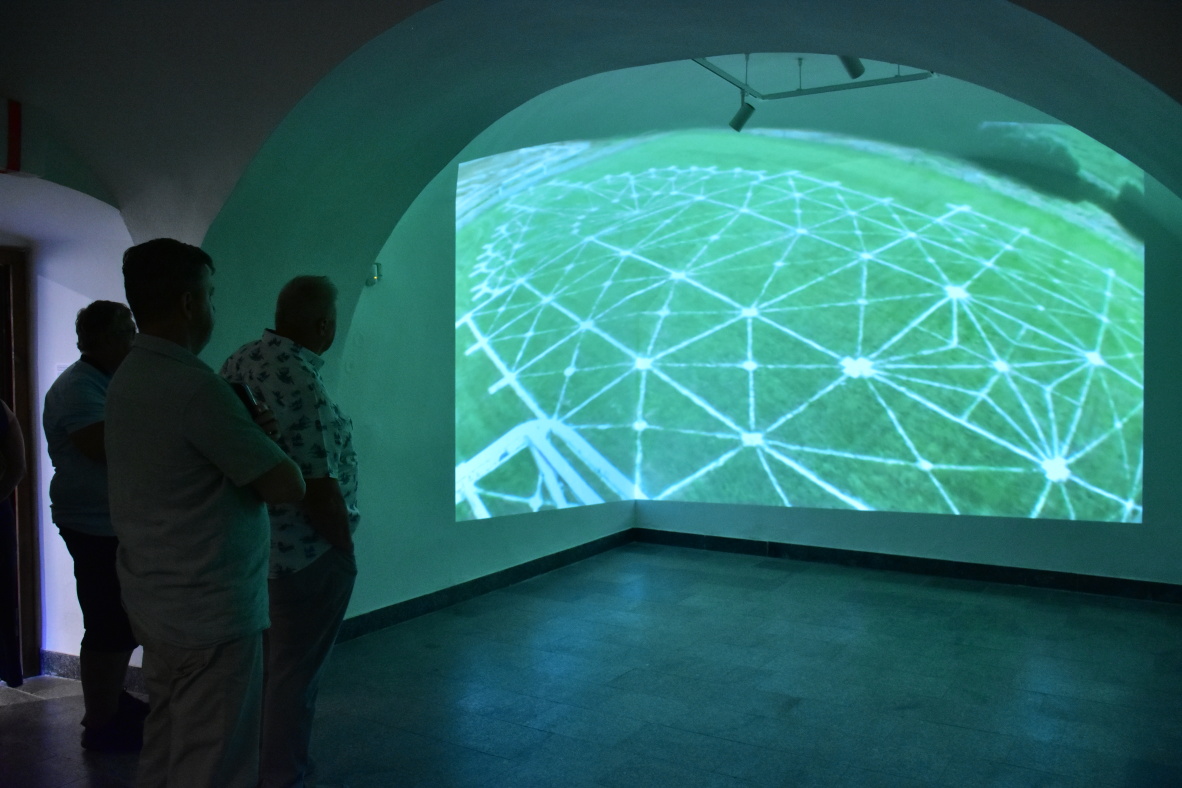
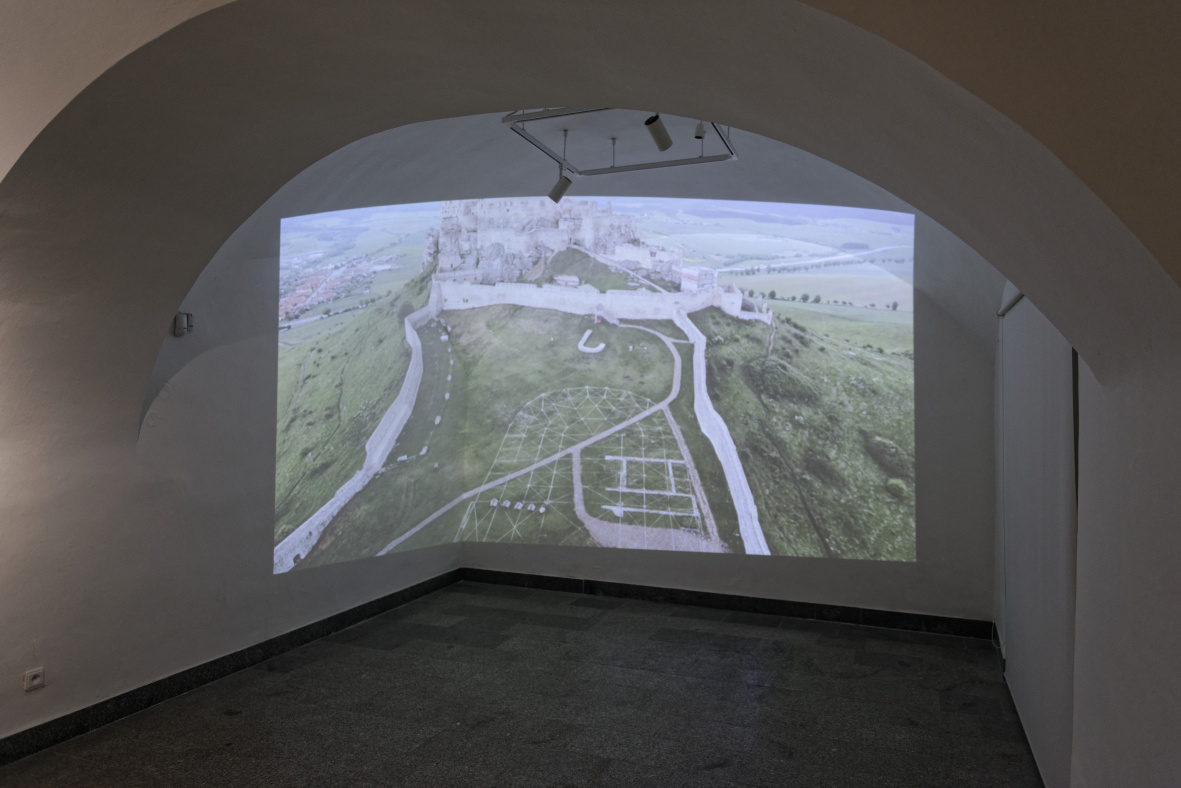
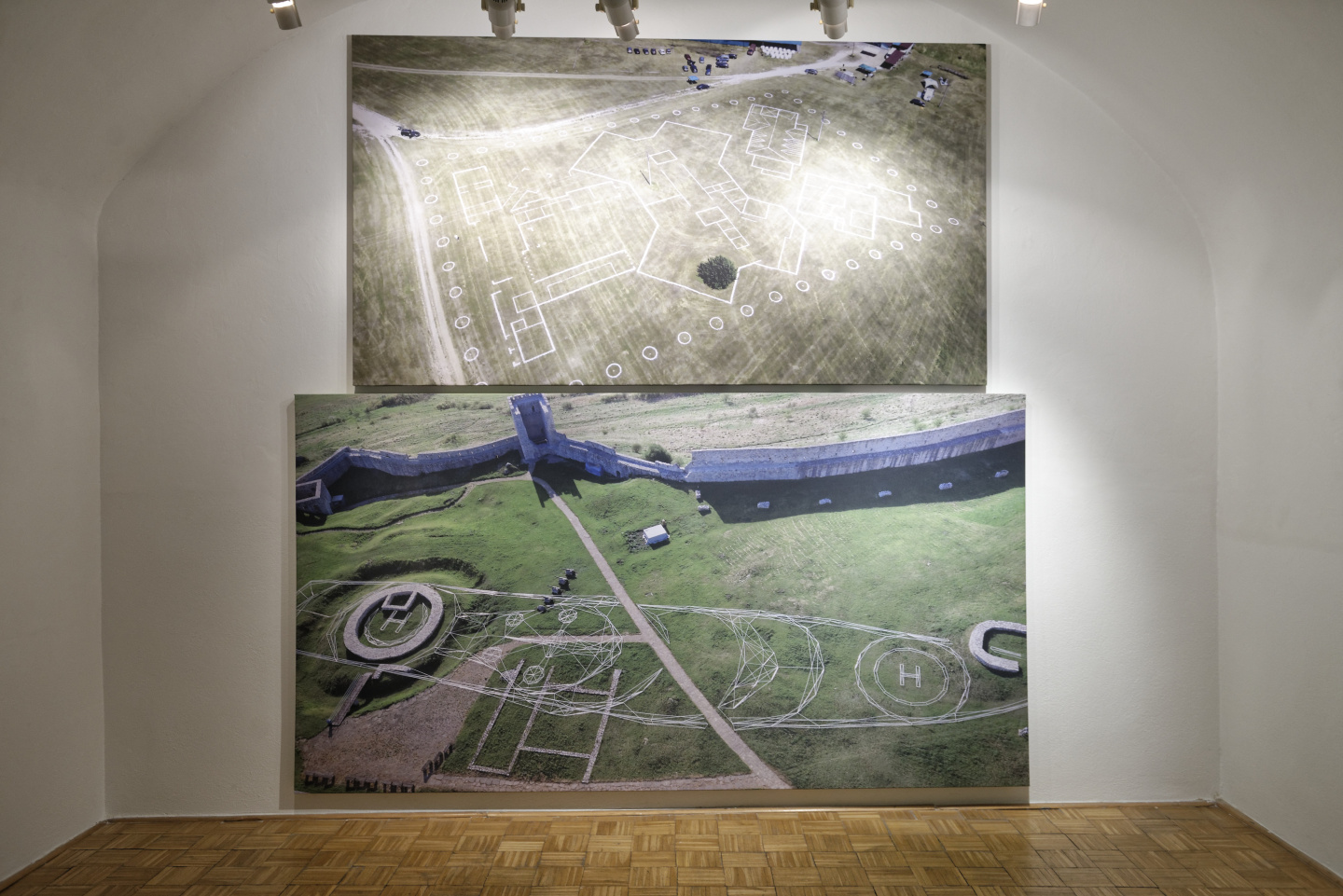
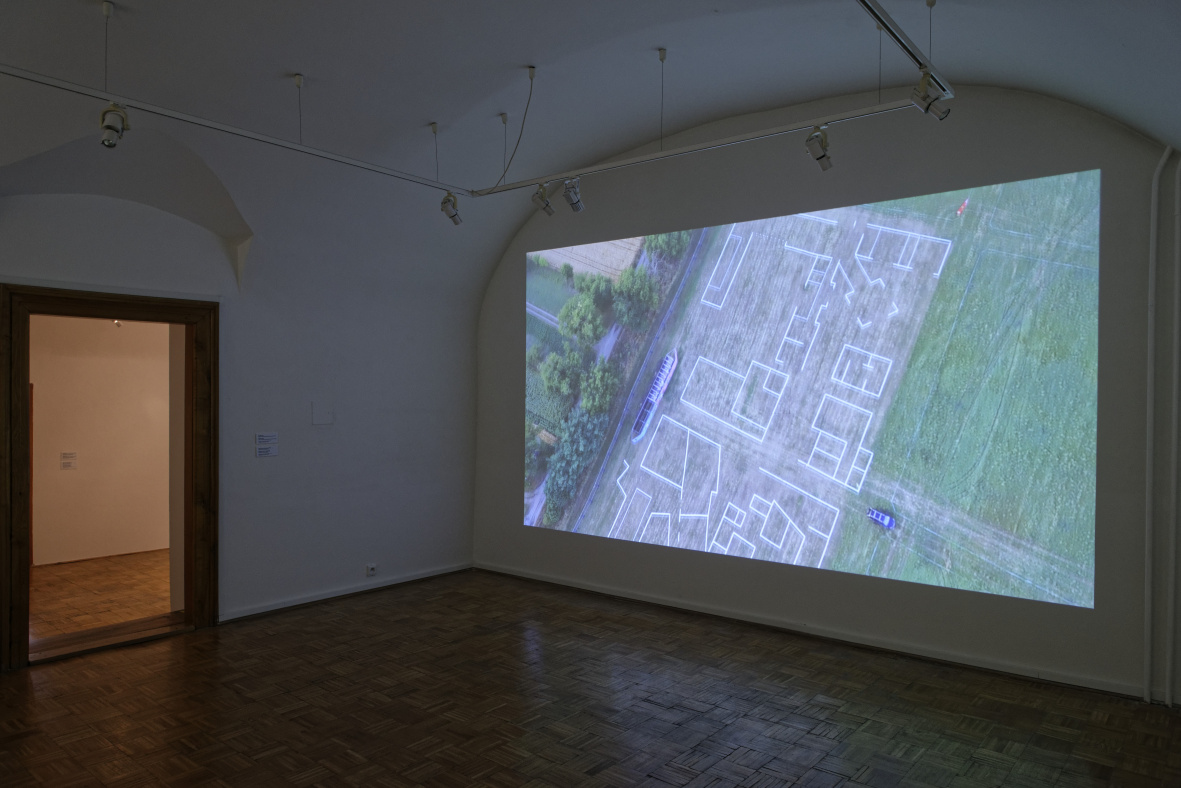
The exhibition In Profanum showcases two of the main threads of Lányi’s art. The first of these is a series of large-format drawings which were created in the public space or in the landscape from 2009 to the present. In this series of works, he explores the idea of the outlines of famous Gothic cathedrals, transporting their floorplans into novel spatial contexts. This concept was later developed into large-scale interventions in the landscape in which the cathedral outline becomes a symbol of cultural memory, spiritual identity and the human relationship with space. The network of white lines which forms the sacral layout is more than a mere architectural plan: it is a representation of the traces of the past, an imprint of spiritual and cultural identity which the artist relocates into new spatial and semantic contexts. Lányi works in a scale of 1:1, and the resulting artworks foster a dialogue between place, the past and the present, and between the physical existence of architecture and the message which it conveys.
These outlines and their interventions should not be seen solely as works of art; in a broader sense, they are visual essays on memory, identity and cultural values of the European legacy. From these simple geometric elements, these lines tracing the outlines of iconic buildings, Lányi creates works of art with a powerful expressive force.
One of the most significant of these projects emerged in the historically resonant environment of the Spiš region: a recreation of the outline of the Cathedral of Notre Dame in the courtyard of Spiš Castle. Rather than an architectural reconstruction of the building, Lányi’s work reconstitutes the traces of its memory – the subtle lines stretching across the terrain allow visitors to enter into the sacral space of one of Europe’s most iconic cathedrals while remaining physically rooted in the Spiš landscape. The project is a continuation of the artist’s long-term concept in which he compares the outlines of sacral buildings. The simple lines in the landscape are a response to contemporary events, posing legitimate questions over moral values and responsibilities and the direction of modern society.
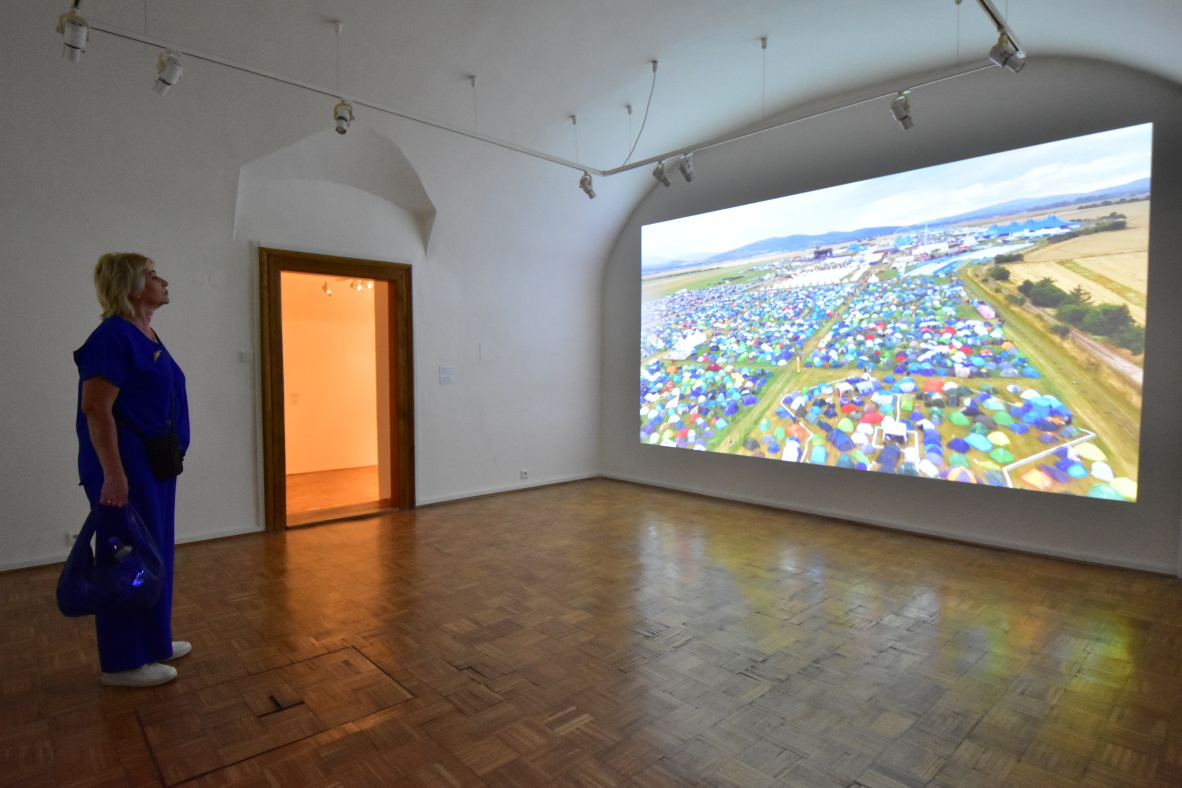
Drawings in the landscape are inherently transitory; rather than forming a permanent object, they instead initiate a dialogue with the place in which they are made, drawing attention to contemporary society or cultural issues. The landscape is thus transformed into a vast canvas; the means by which the artworks interact with the space are minimalistic, yet their semantic charge is immense. Temporality is a key aspect of Lányi’s interventions; the artworks can disappear within a matter of days, but their presence persists in the memory of those who experienced them. The strength of his work lies in the monumentality of its concept rather than its materiality; the drawings allow past and present to meet in space, bearing a spiritual message and posing social questions.
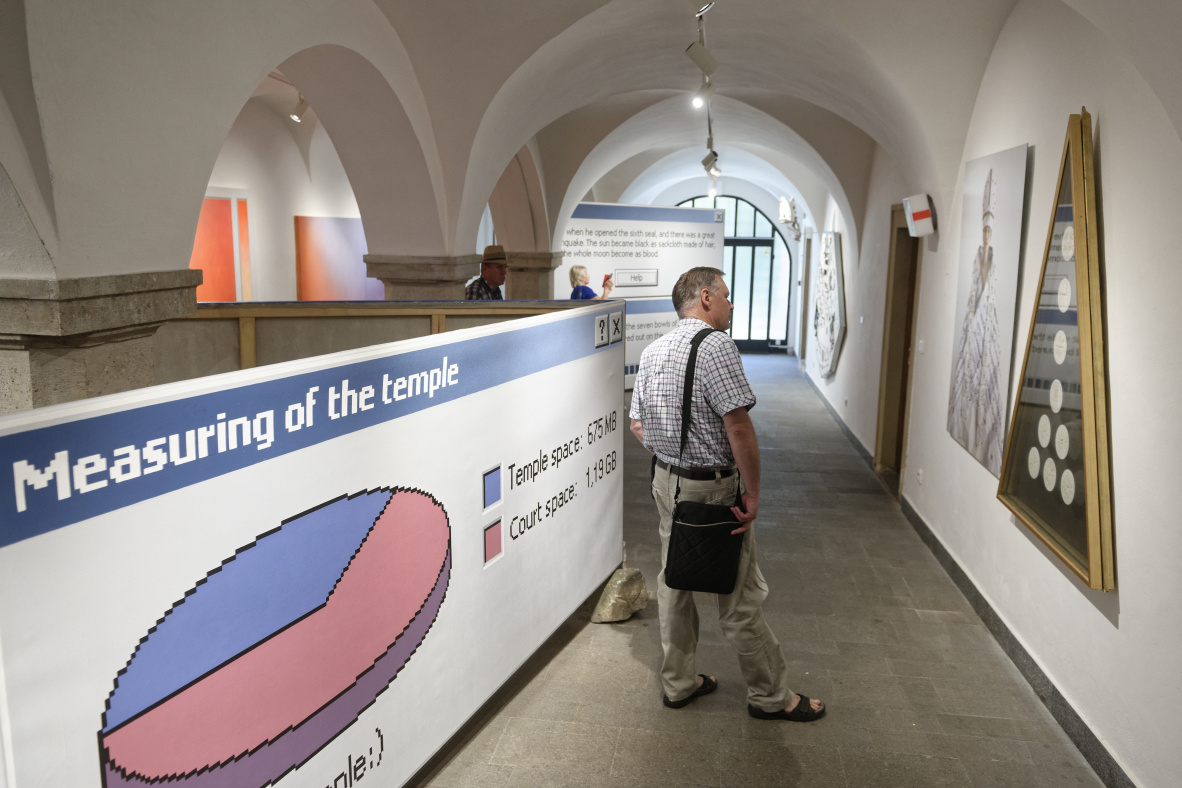
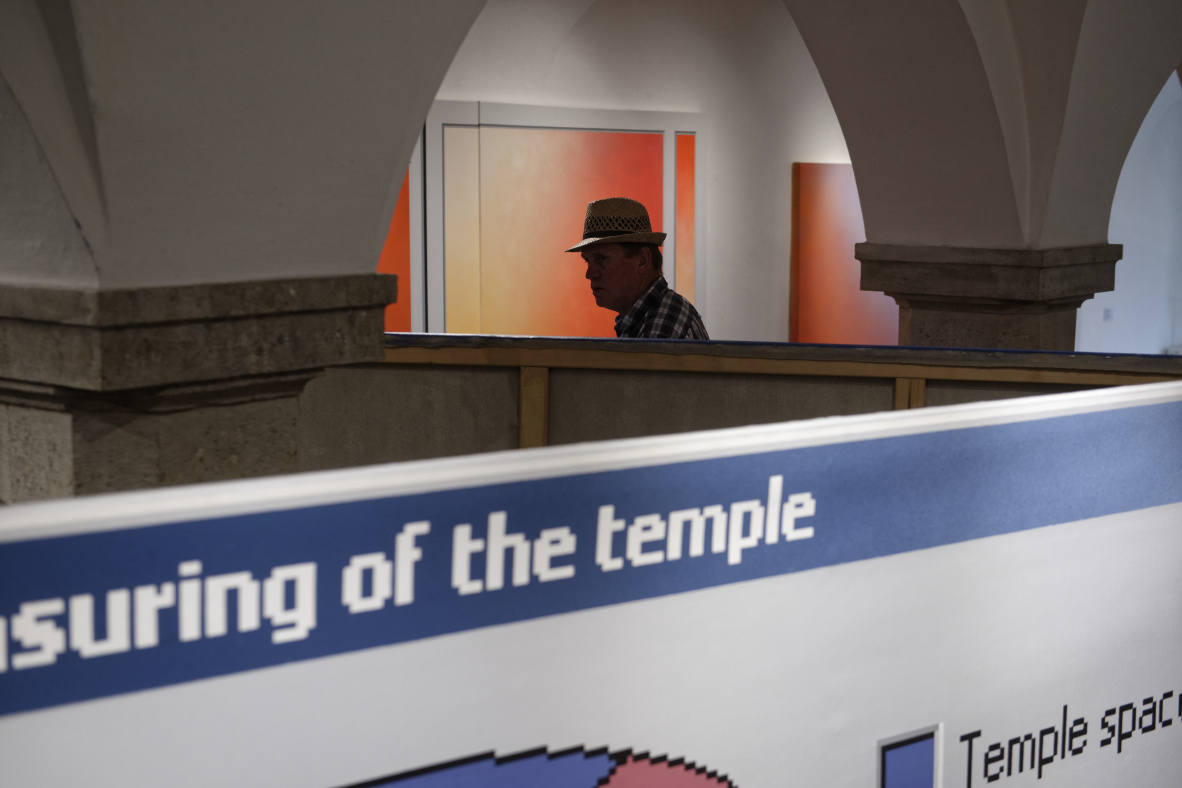
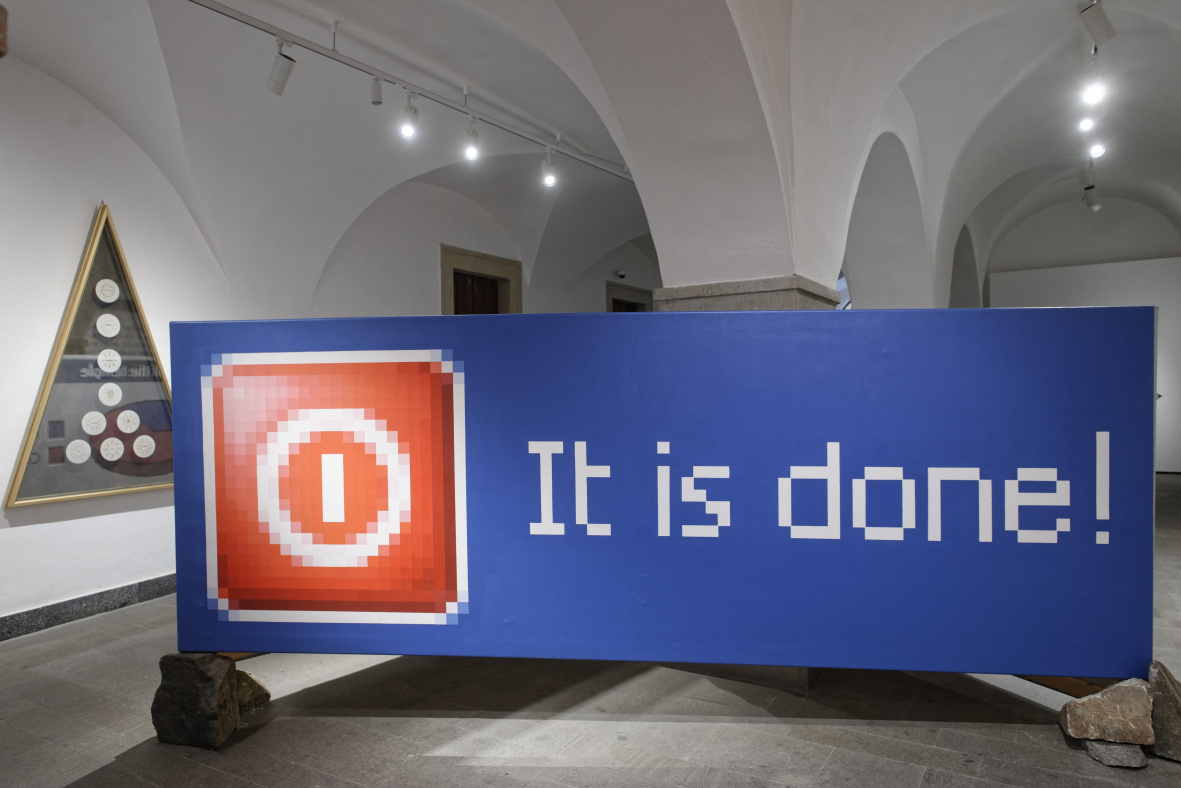
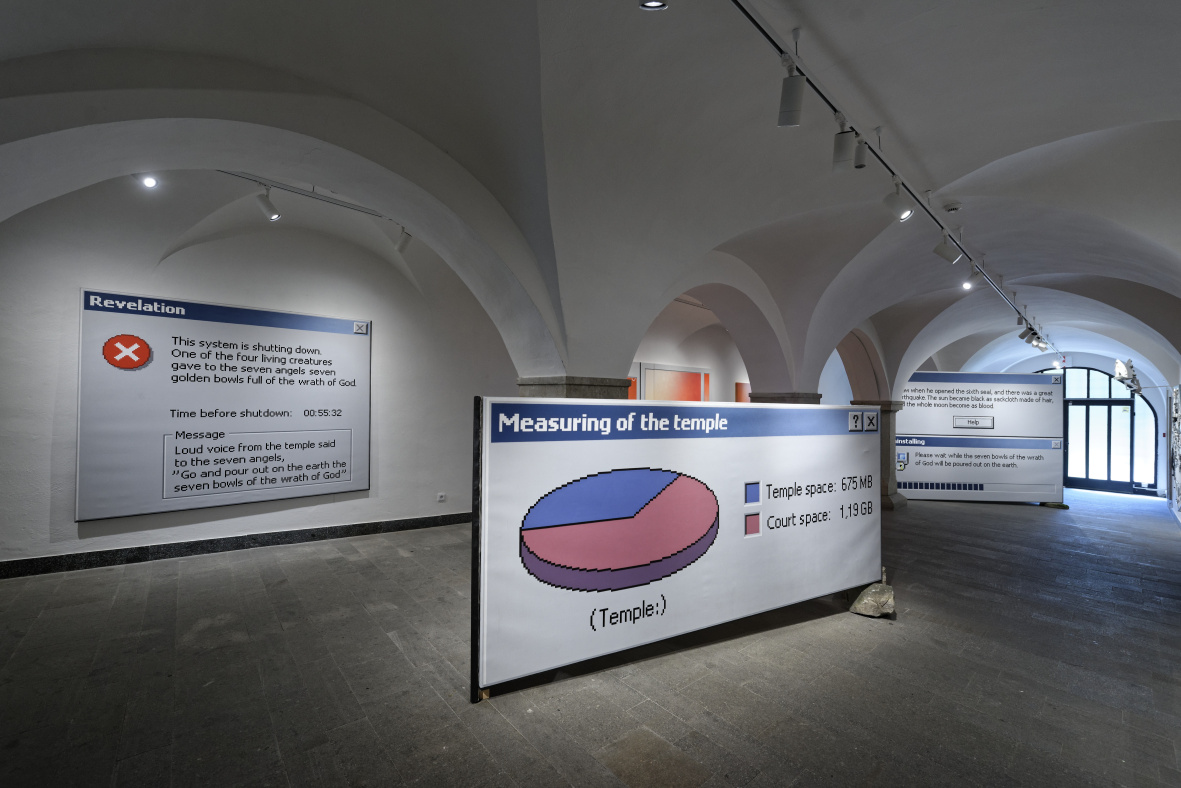
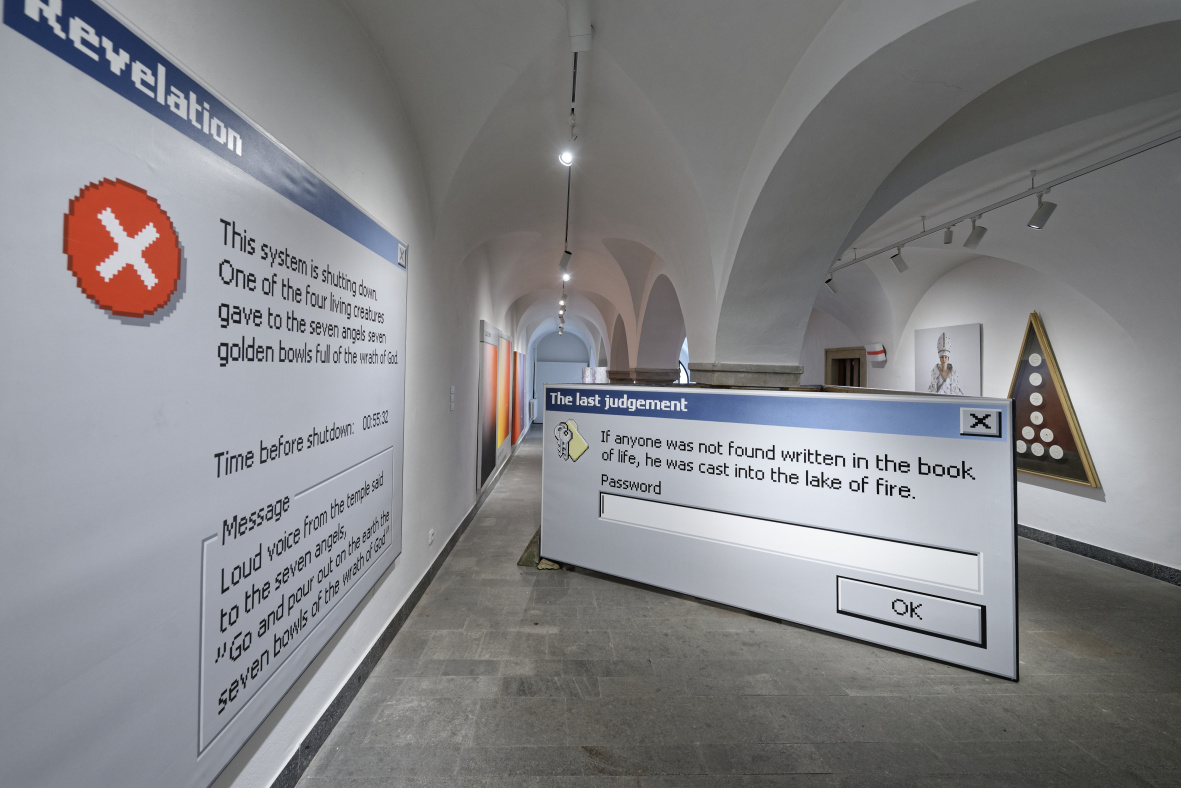
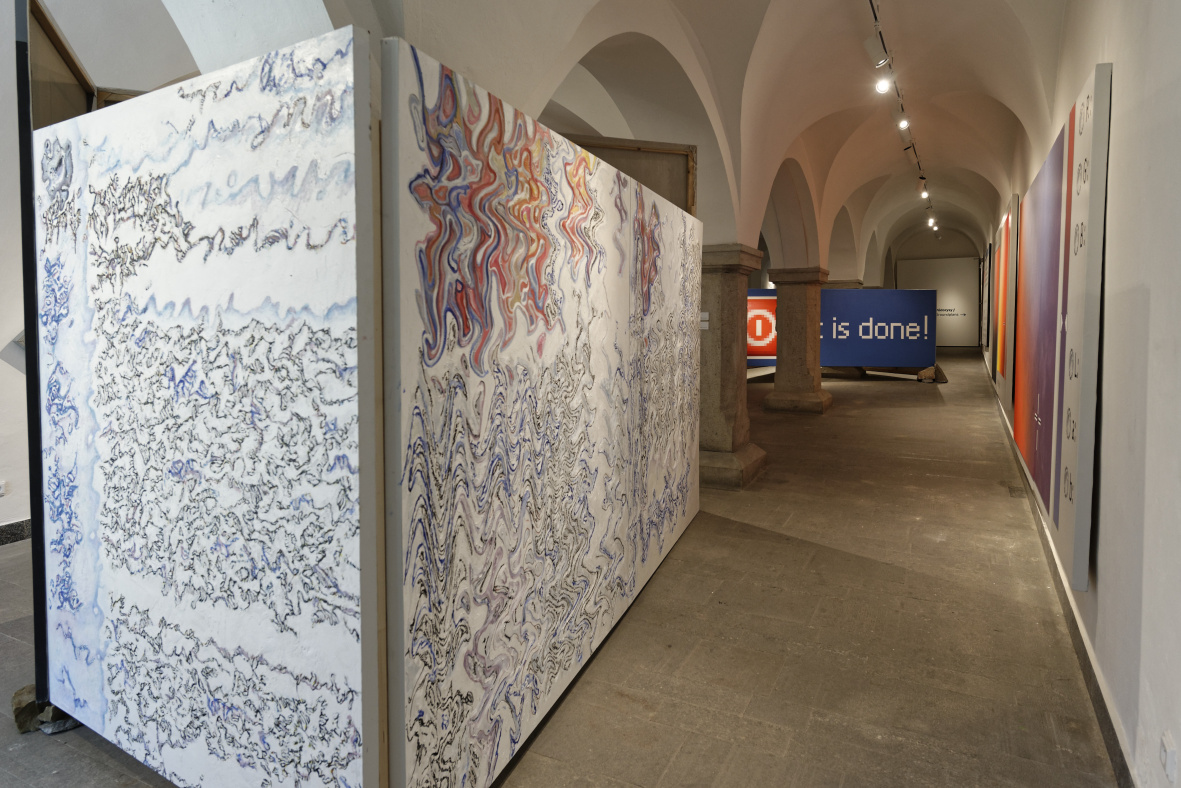
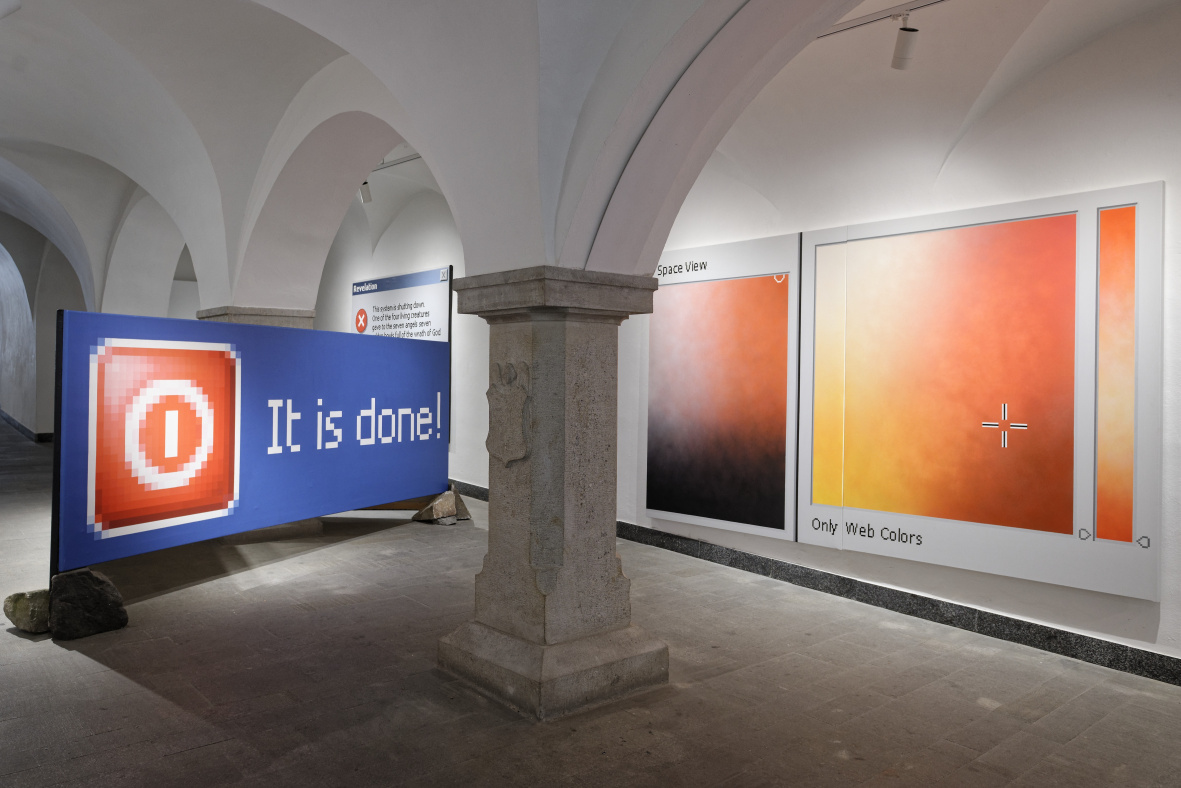
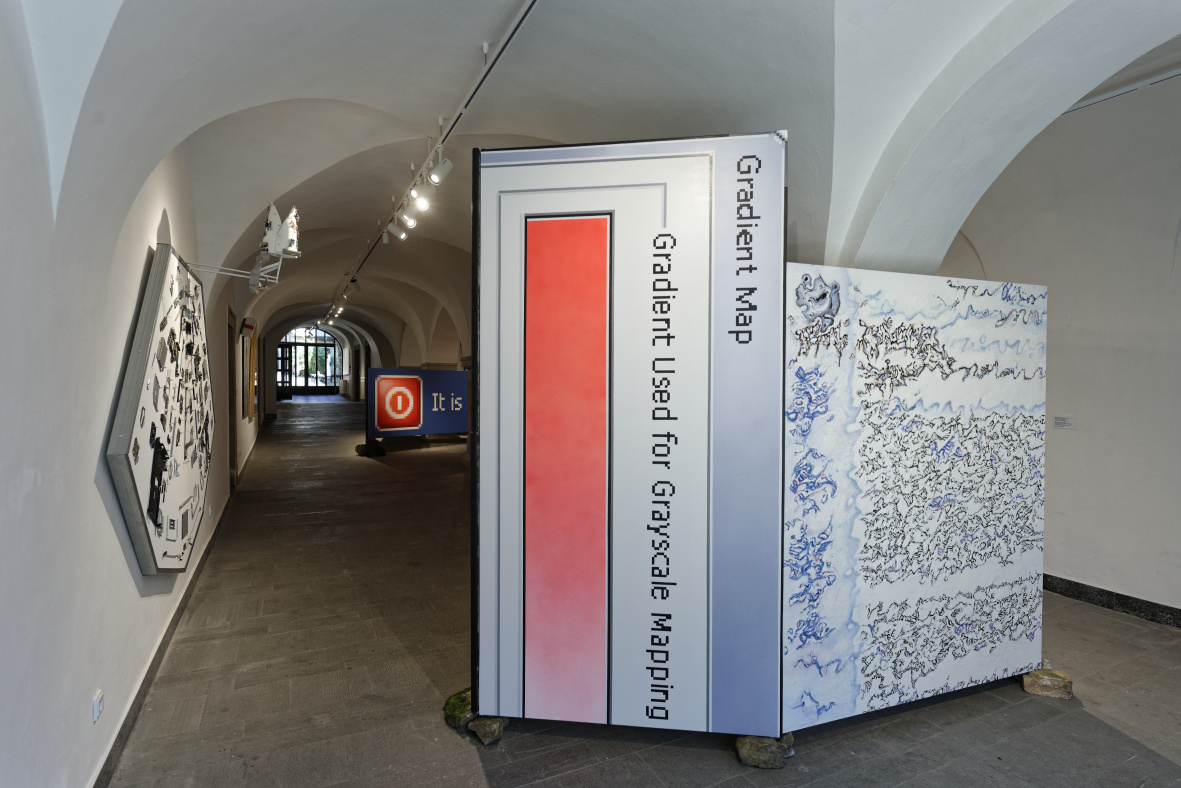
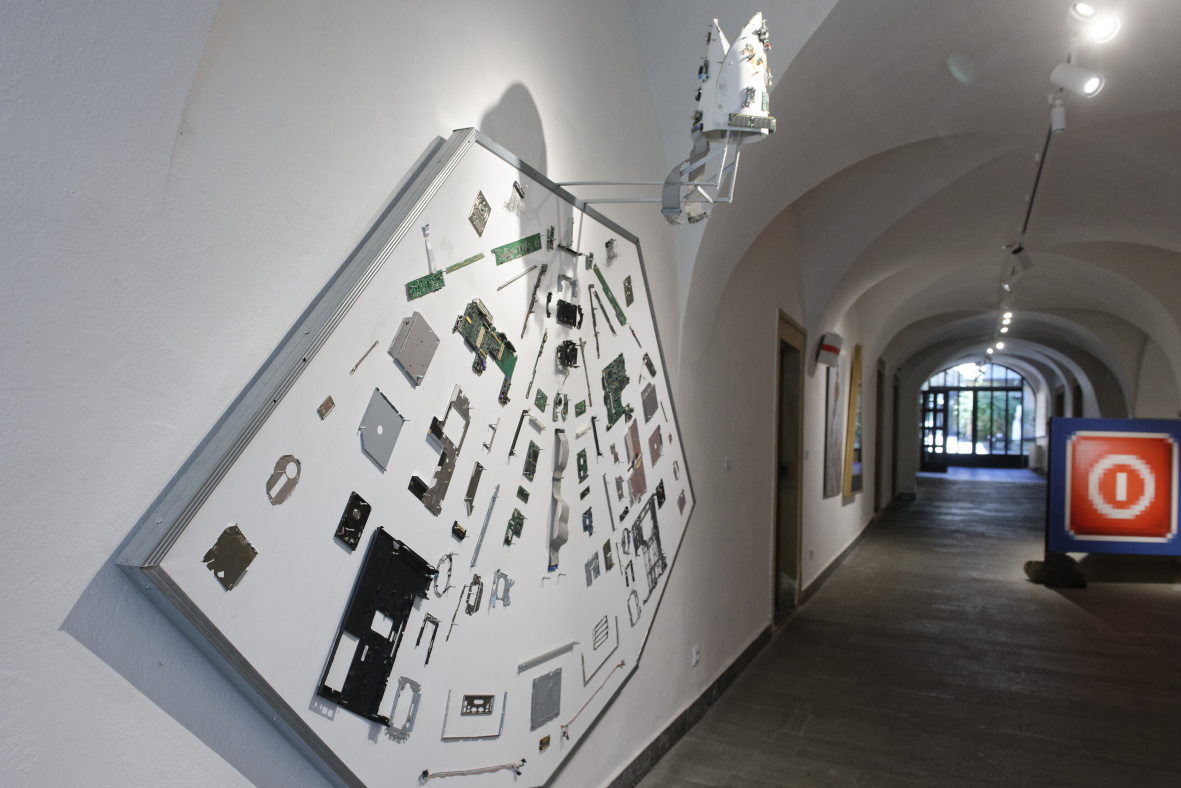
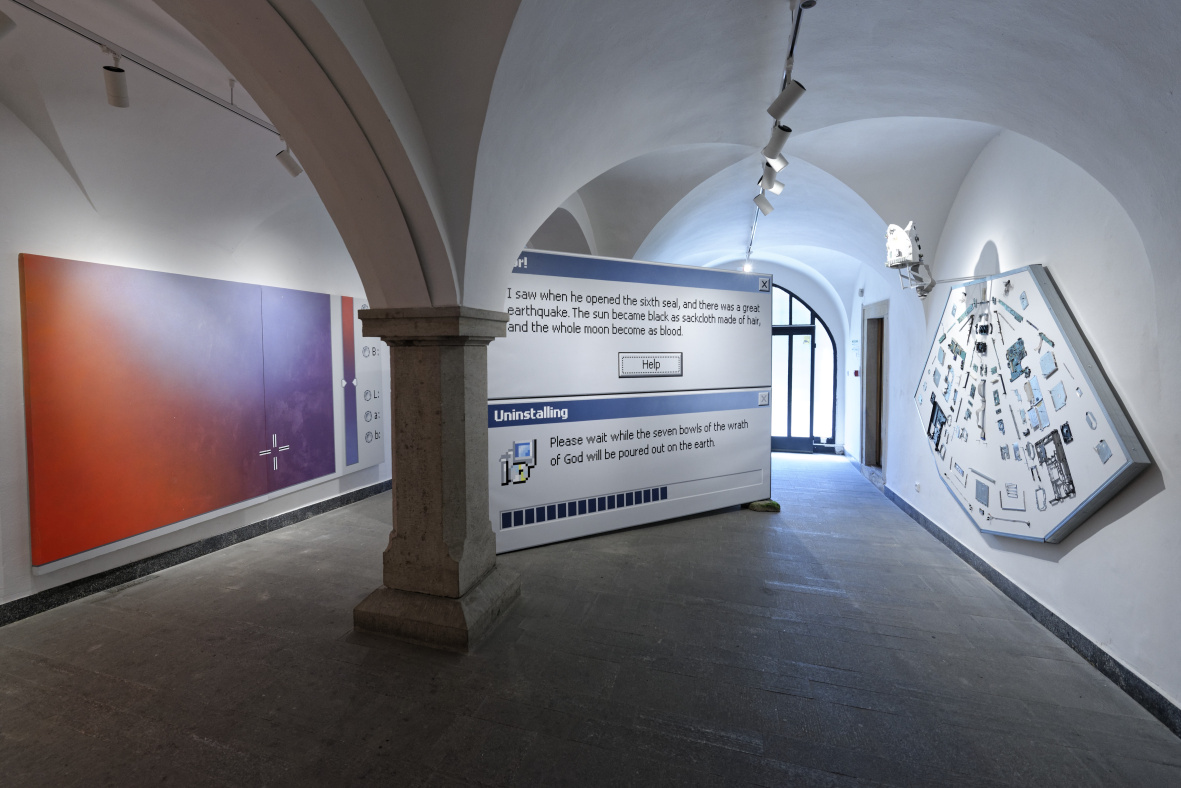
The second thread of Lányi’s art is a series of works whose style and form reflect on the issue of the interconnection of religion and the digital realm. These works have evolved over time in line with developments in the digital and virtual environments, but they address these issues not from the perspective of technological progress but by exploring their phenomenological significance in an effort to identify characteristics which resonate with classical religious motifs. Also of relevance in this respect is the ambivalent nature of mythology. In conventional understandings, myths are conceived as traditional mythological narratives, yet they can also be seen in terms of the potential emergence of new mythologies with distinctive approaches. This is the case with Lányi’s cycle of paintings titled Windows or his Digital Religion cycle of objects and installations. Their departure from classical concepts of myth is apparent through their novel formulations of iconological approaches and the artist’s attempts to predict the developments which would enable new mythologies to emerge. Lányi interweaves conventional myths and the digital environment by means of the hierarchies and forms of operating systems.
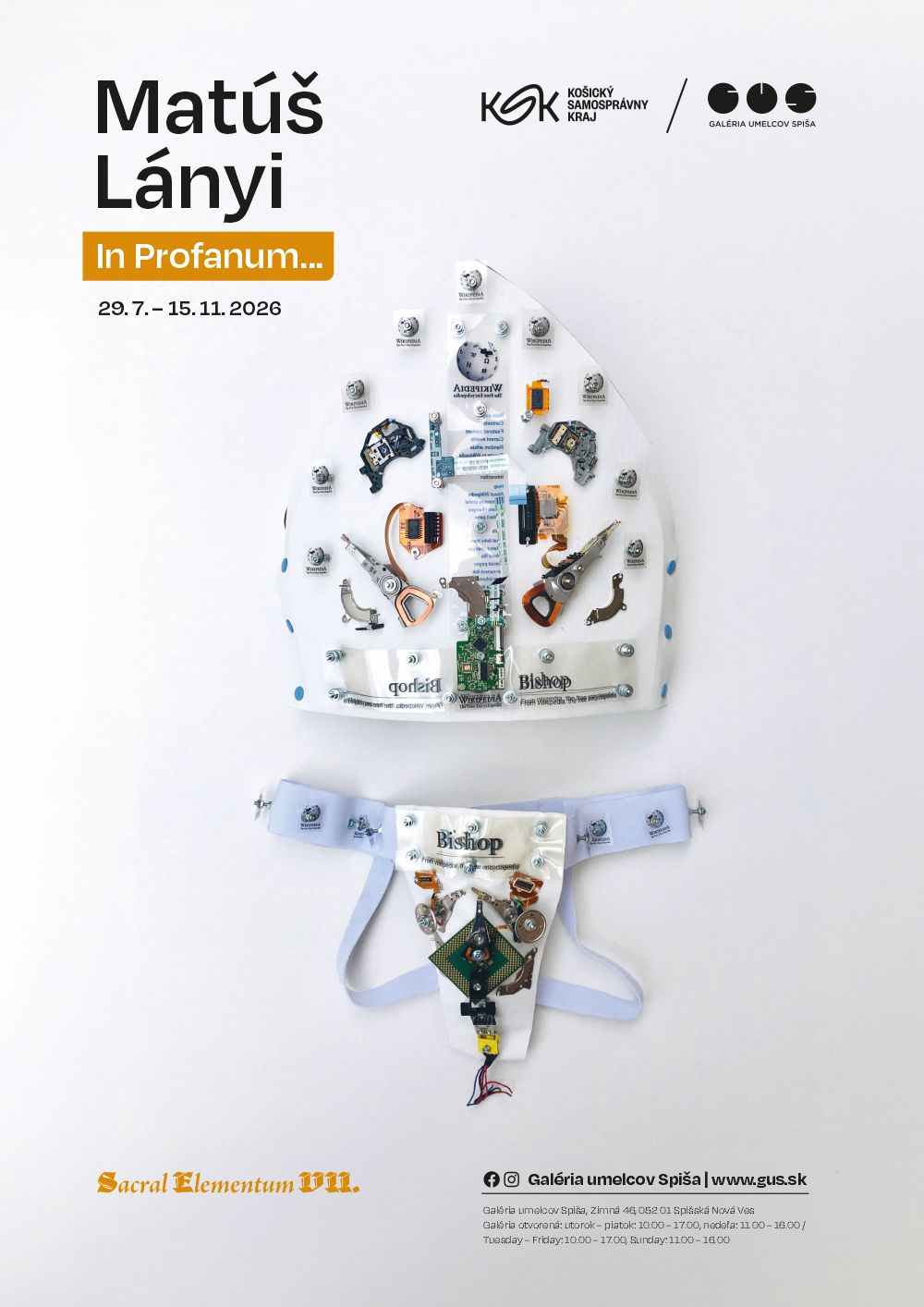
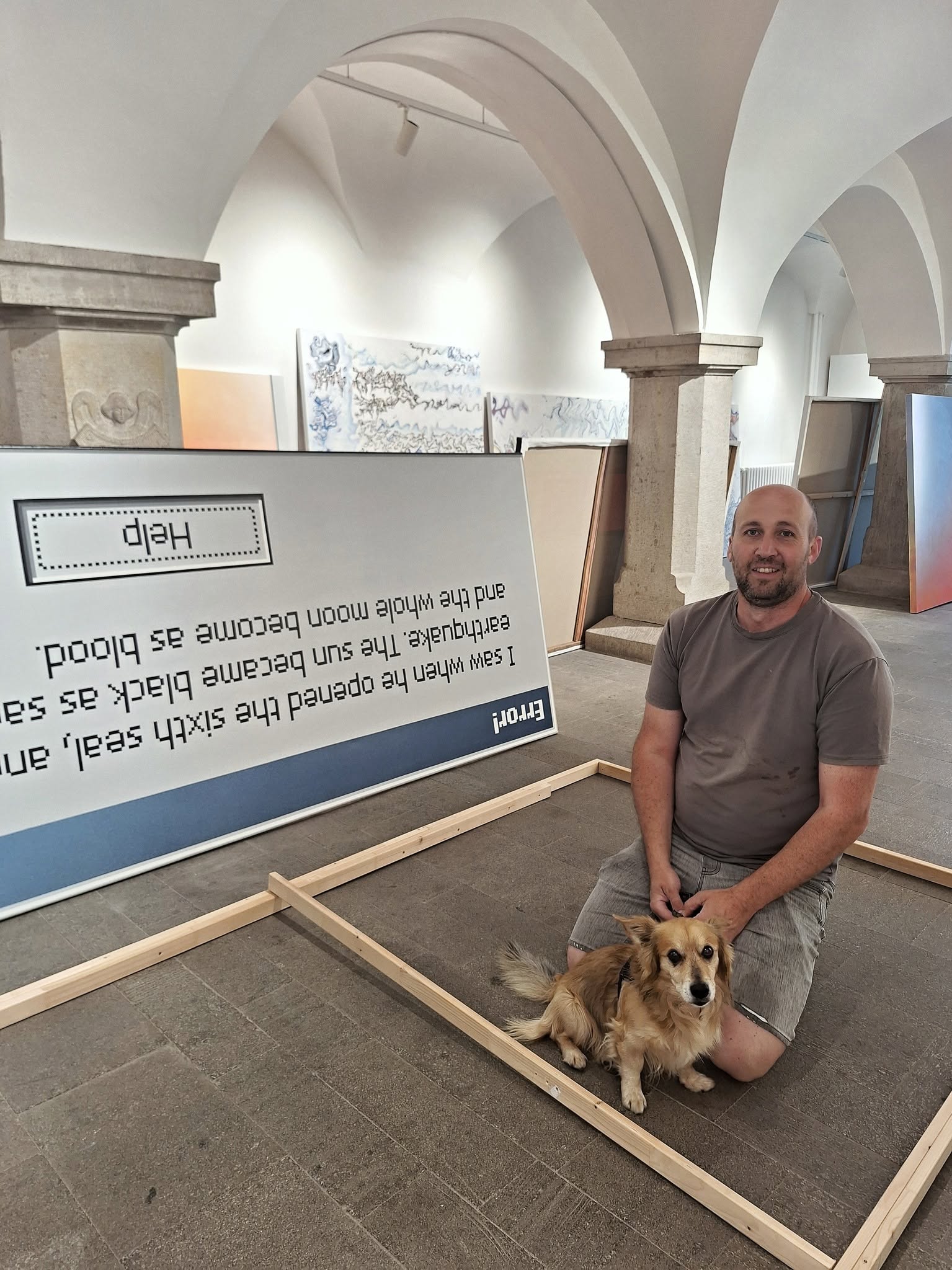
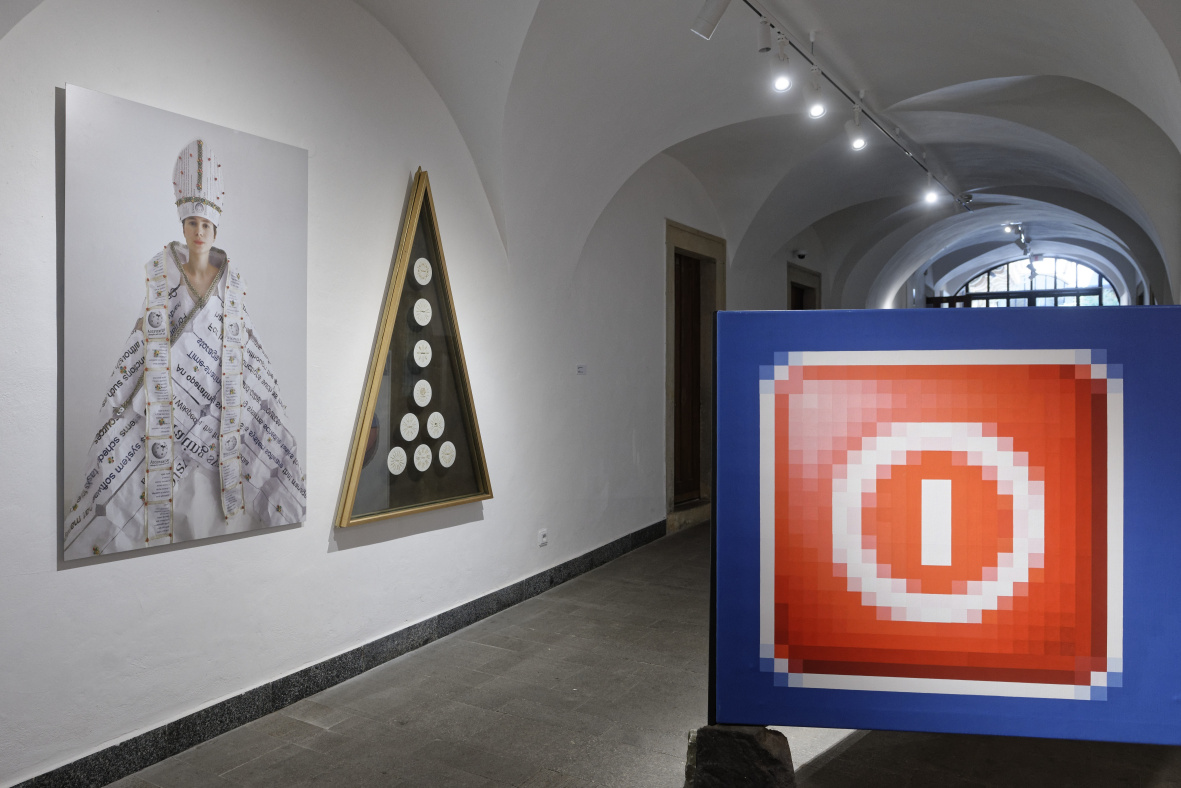
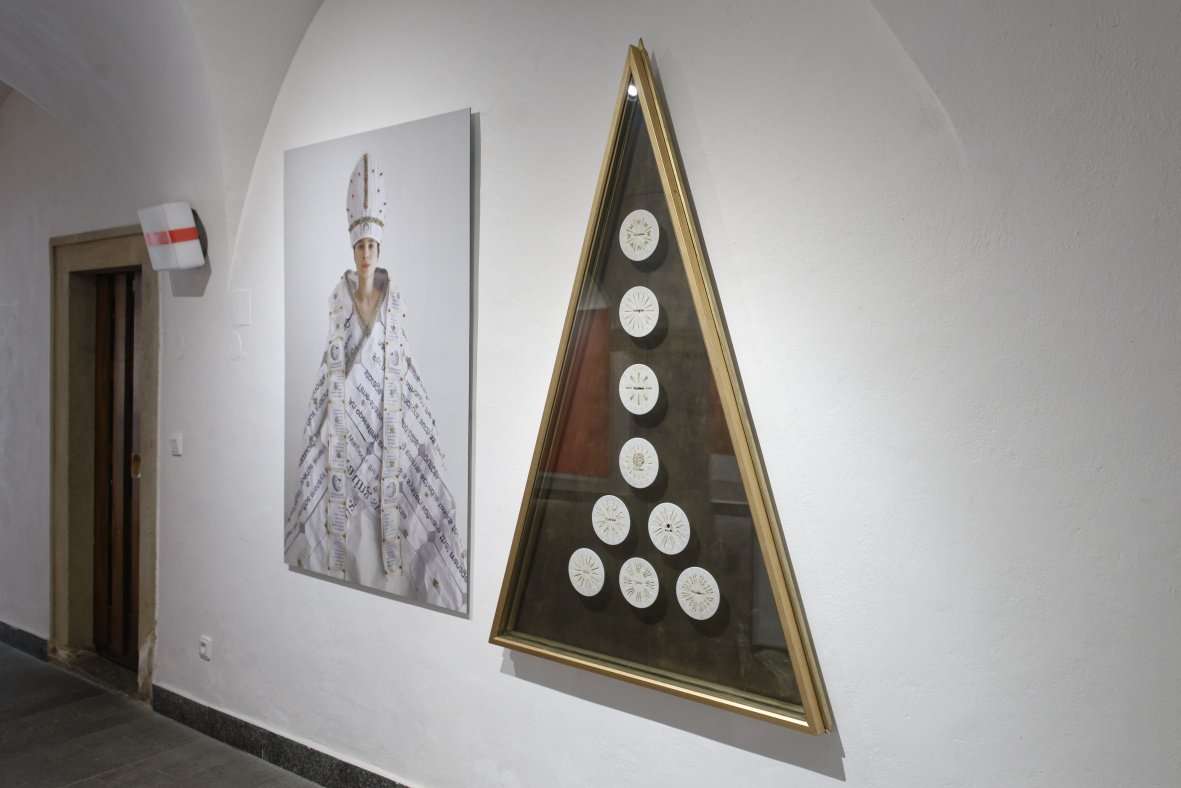
One example of how Lányi applies the visual significance of the digital realm are the paintings which explore the biblical mythology of the Revelations of the Apostle John. While the narrative of the inevitable and irreversible “destruction” of a system plays out across the canvases, the resemblance to the computer environment is made apparent. He also uses authentic digital hardware in his objects, granting them the status of reliquaries or precious gems by decorating them with liturgical vestments, bishops’ mitres and other insignia. Lányi is offering us an outline of the iconographic system of a fictitious mythology.
Lányi himself states that these digitally influenced works were inspired by social responses to the accelerating rates of technological development. Contemporary humankind might even see this progress as a new form of miracle, one with a very real and direct impact on our existence, especially given our growing dependence upon it, whether positive or negative.
PhDr. Dáša Uharčeková Pavúková,
exhibition curator
_____
About the artist
Mgr. art. Matúš Lányi, ArtD. (*1981, Levoča) is from Spišské Podhradie. He studied at the Department of Fine Art and Intermedia at the Technical University of Košice, completing his master’s studies between 2000 and 2007, followed by his doctoral studies between 2017 and 2021. Lányi works in different media, ranging from paintings, sculptures and video to interventions in the public space or the landscape. His work can be found in various public and private collections both in Slovakia and abroad. He currently lives and works in both Bratislava and Banská Štiavnica. His art ranks him among other artists who apply original and thought-provoking means to connect the spiritual traditions of European art with contemporary thinking; the resulting works generate a powerful cultural, social and spiritual impression.
Artist website
Curator: PhDr. Dáša Uharčeková Pavúková
Curatorial cooperation: Mgr. Lucia Benická – GUS
Production: Mgr. Mária Šabľová – GUS
Graphic design: Mgr. art. Ivana Babejová, ArtD. – GUS
Translation: Bc. Gavin Cowper
Opening of exhibition
29. 7. 2026 at 5:00 PM
Venue
Galéria umelcov Spiša
Zimná 46, Spišská Nová Ves
Duration date
29. 7. – 15. 11. 2026