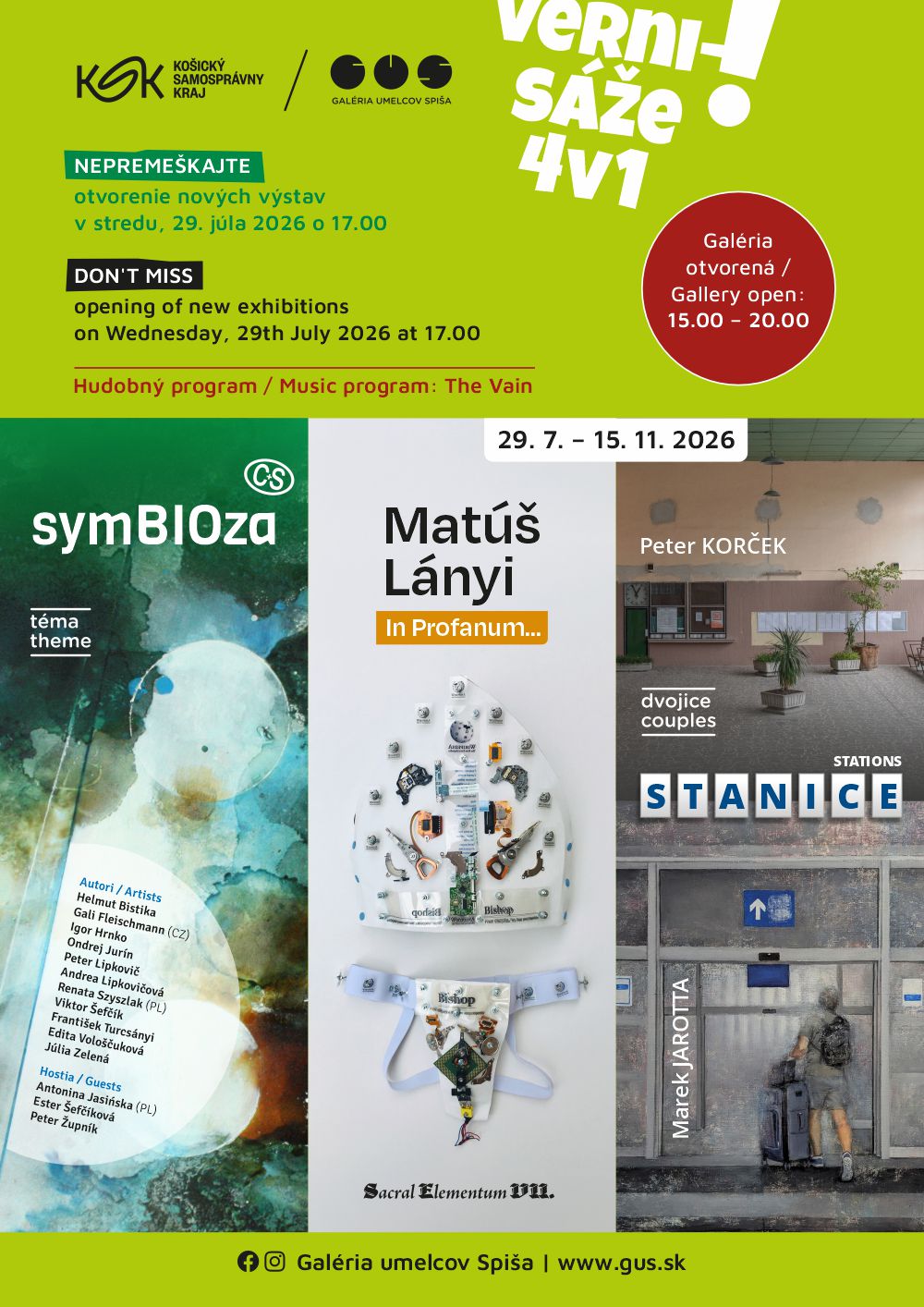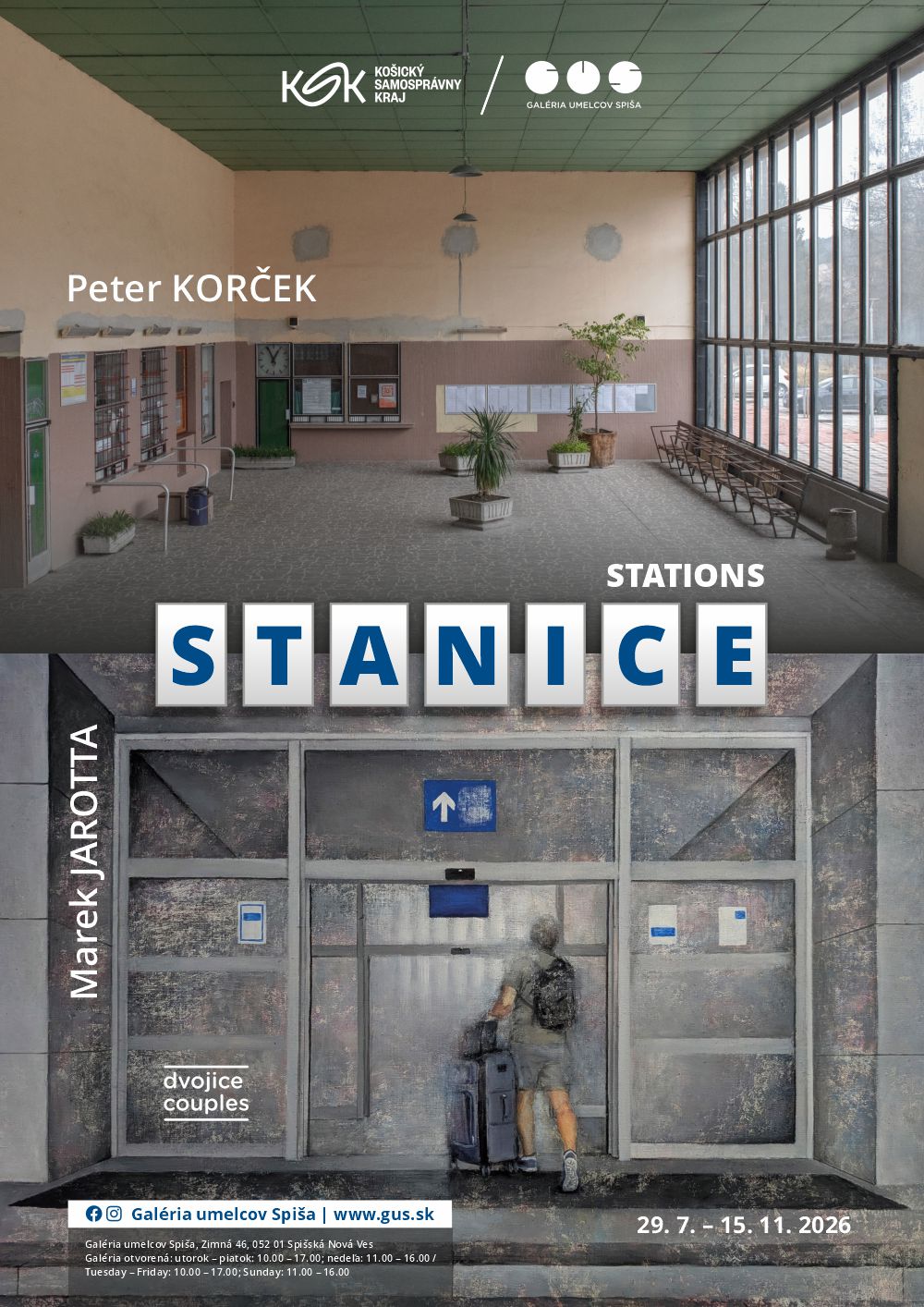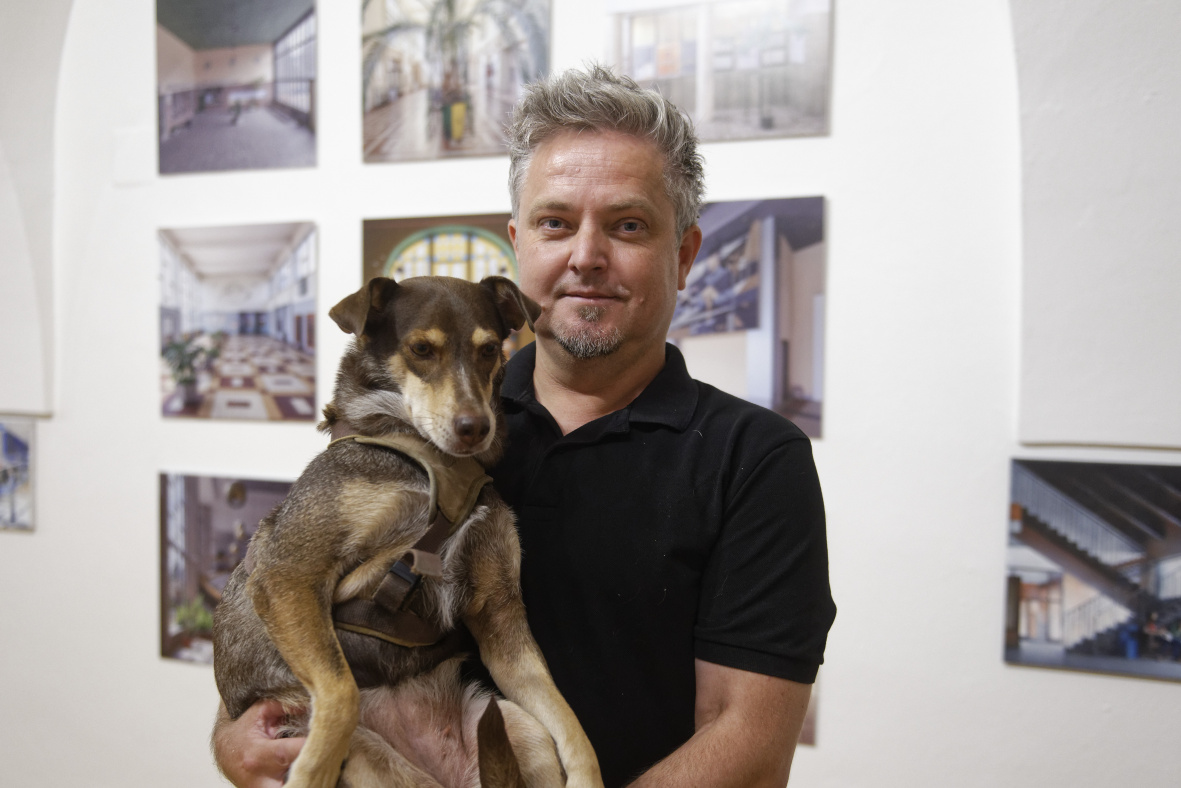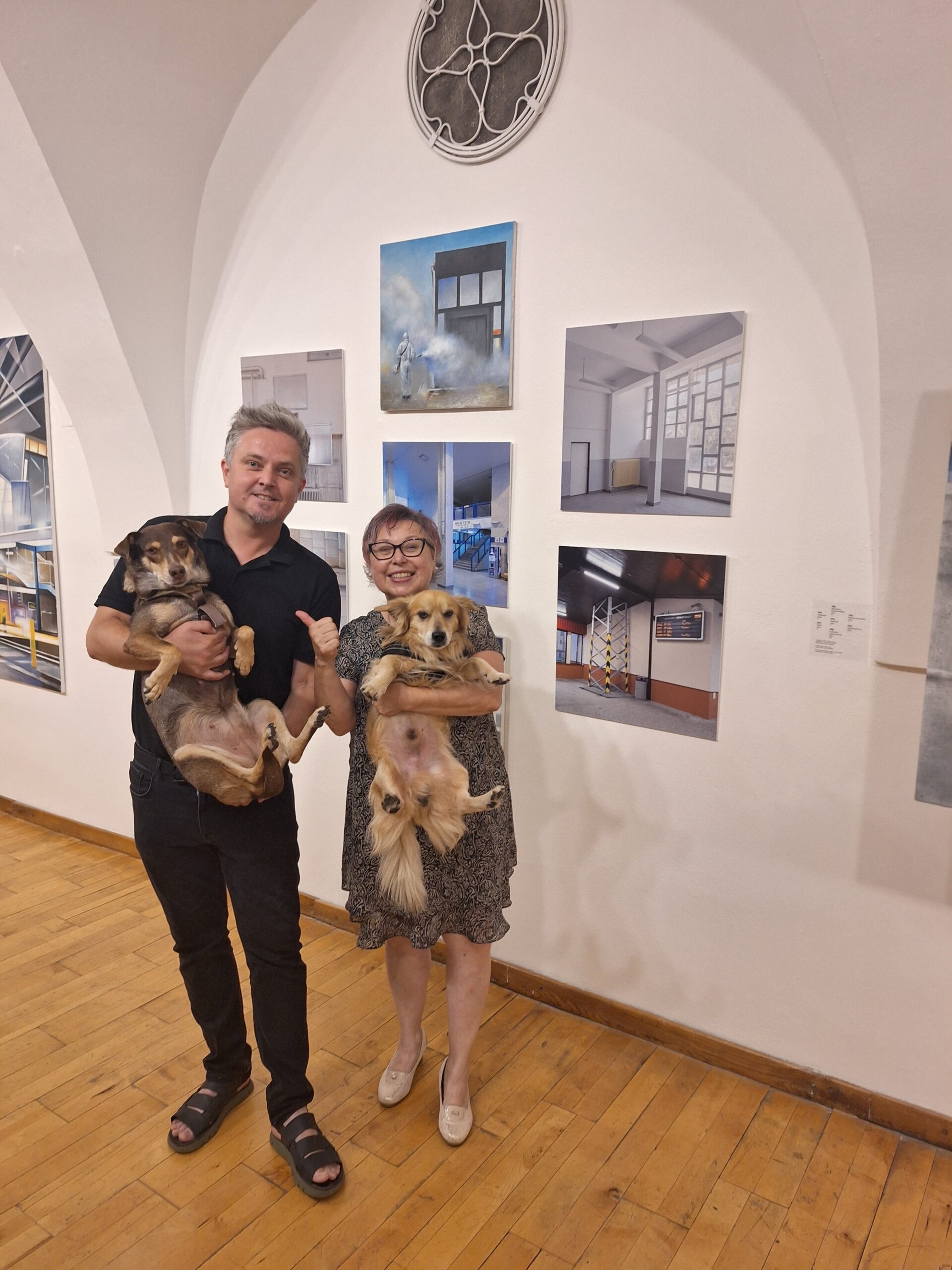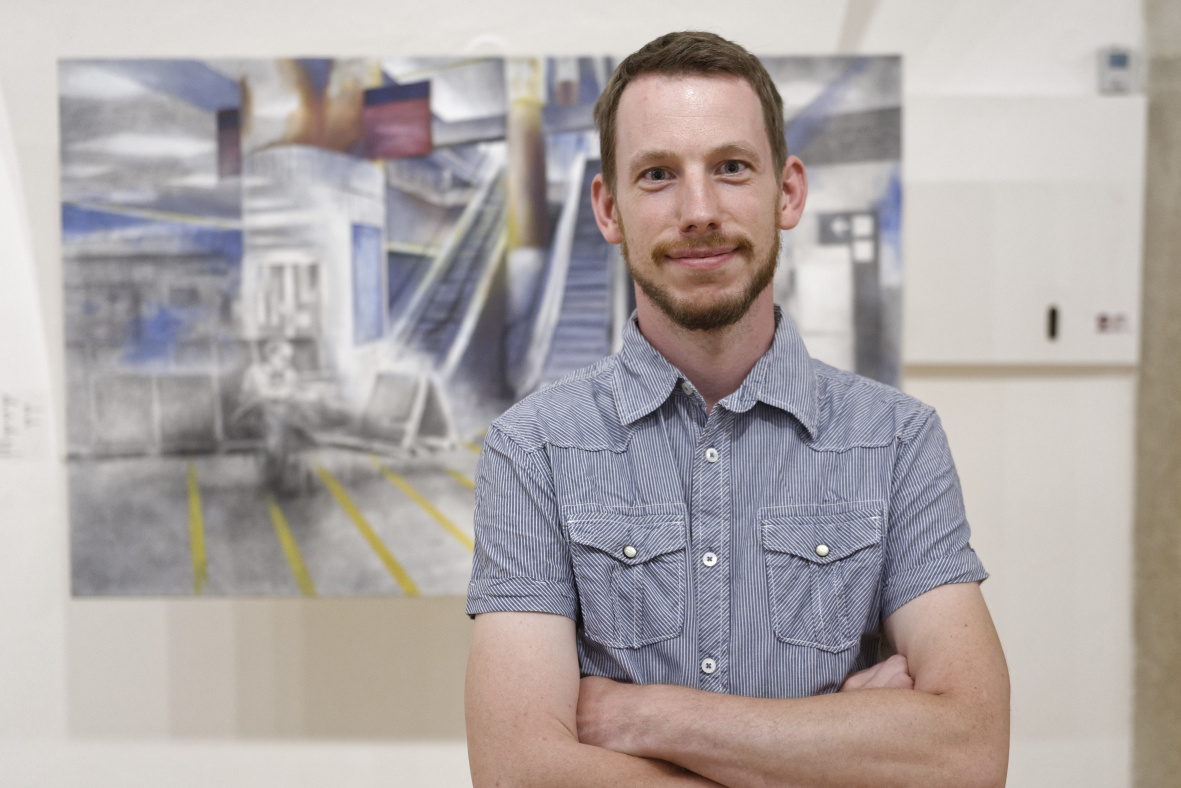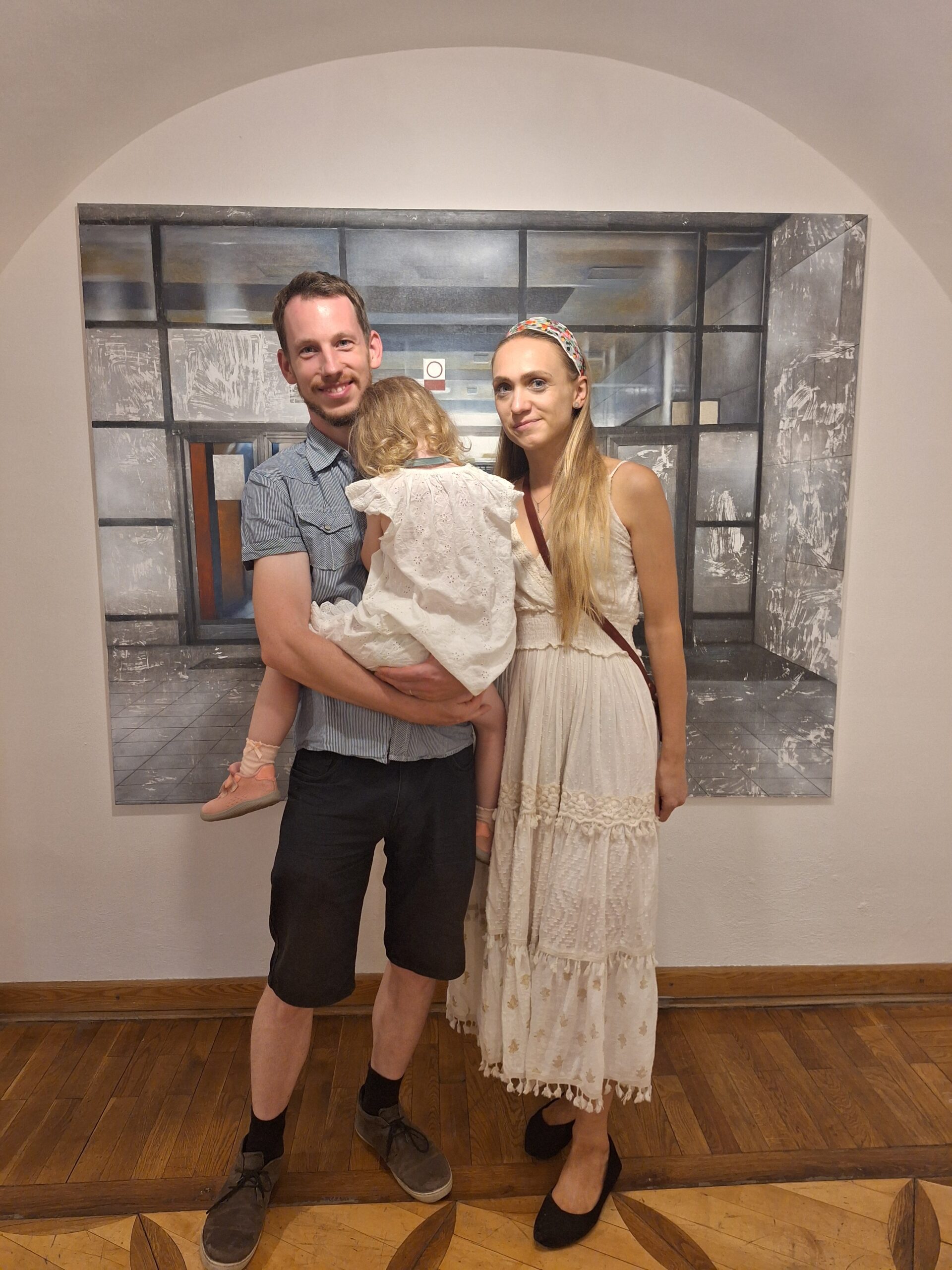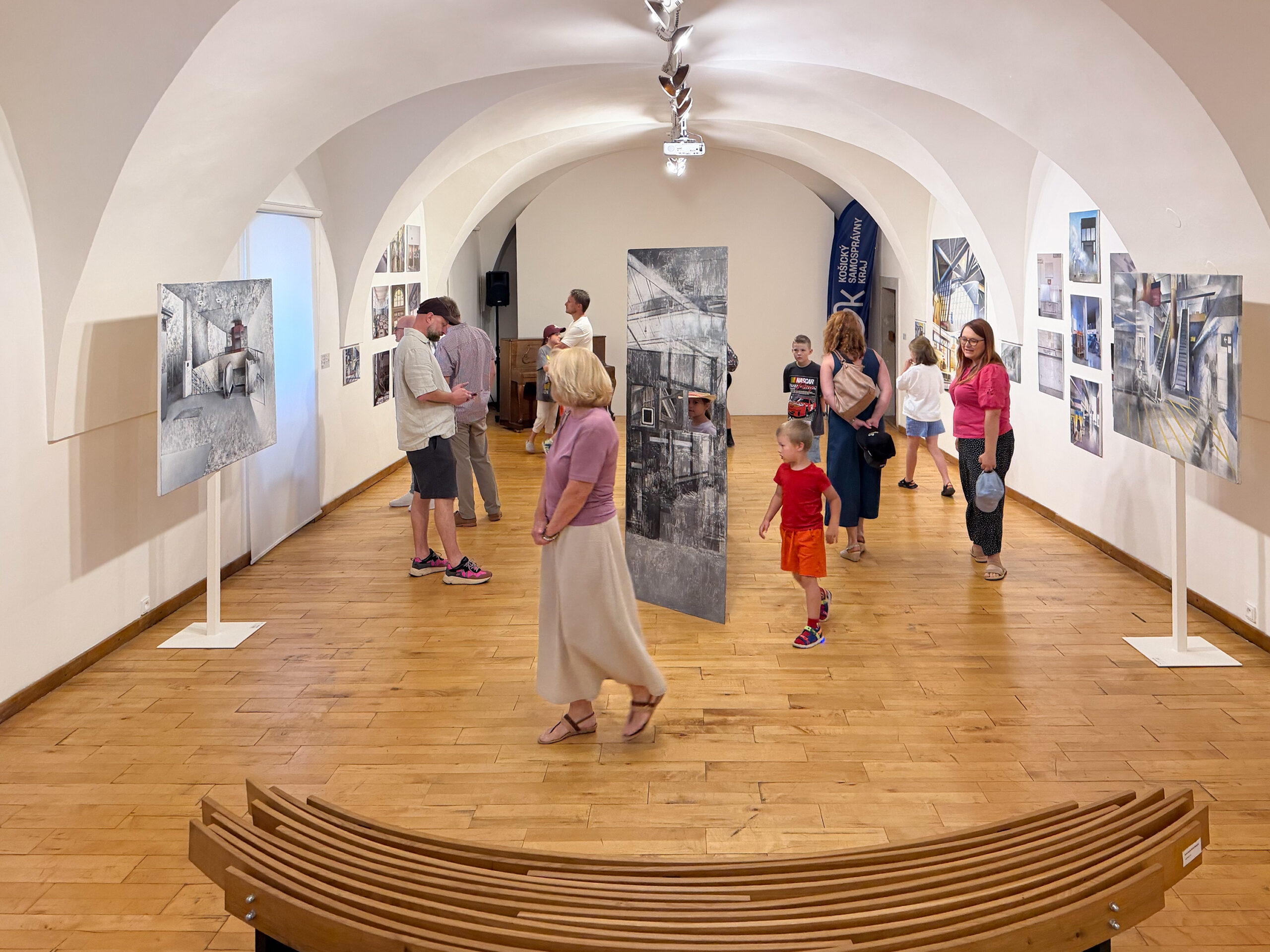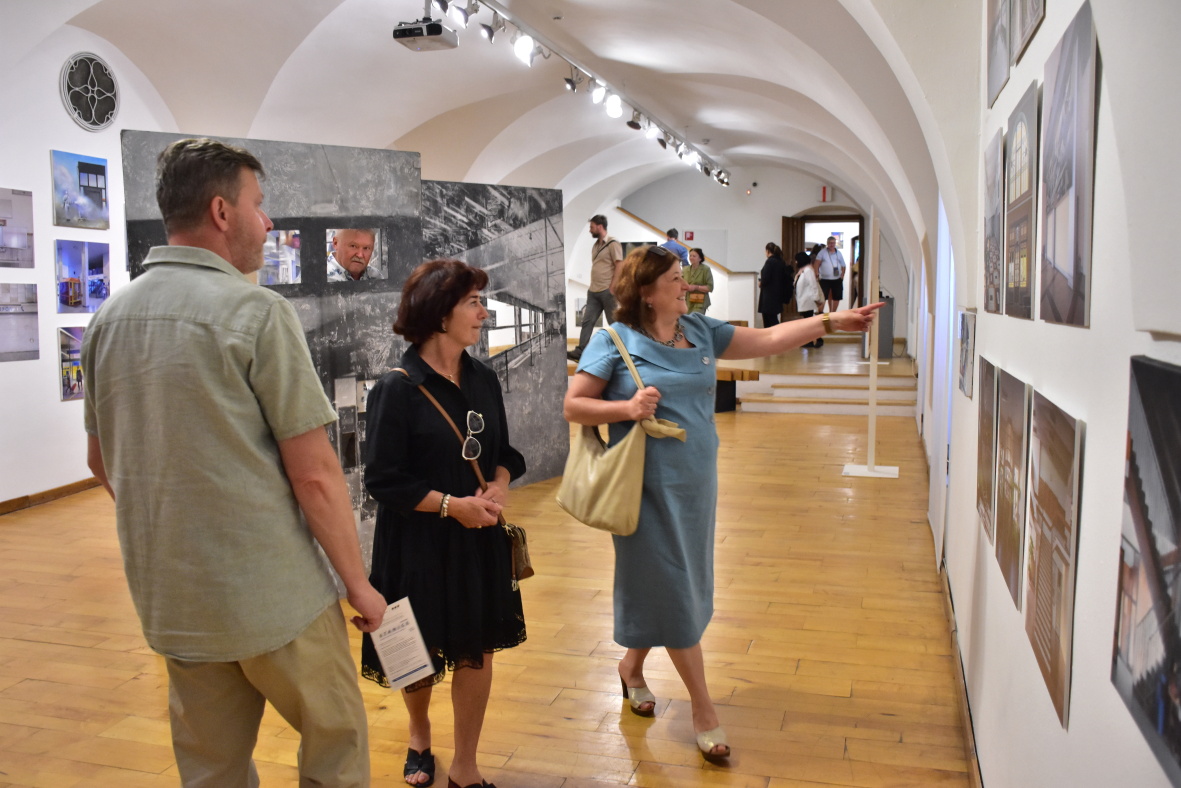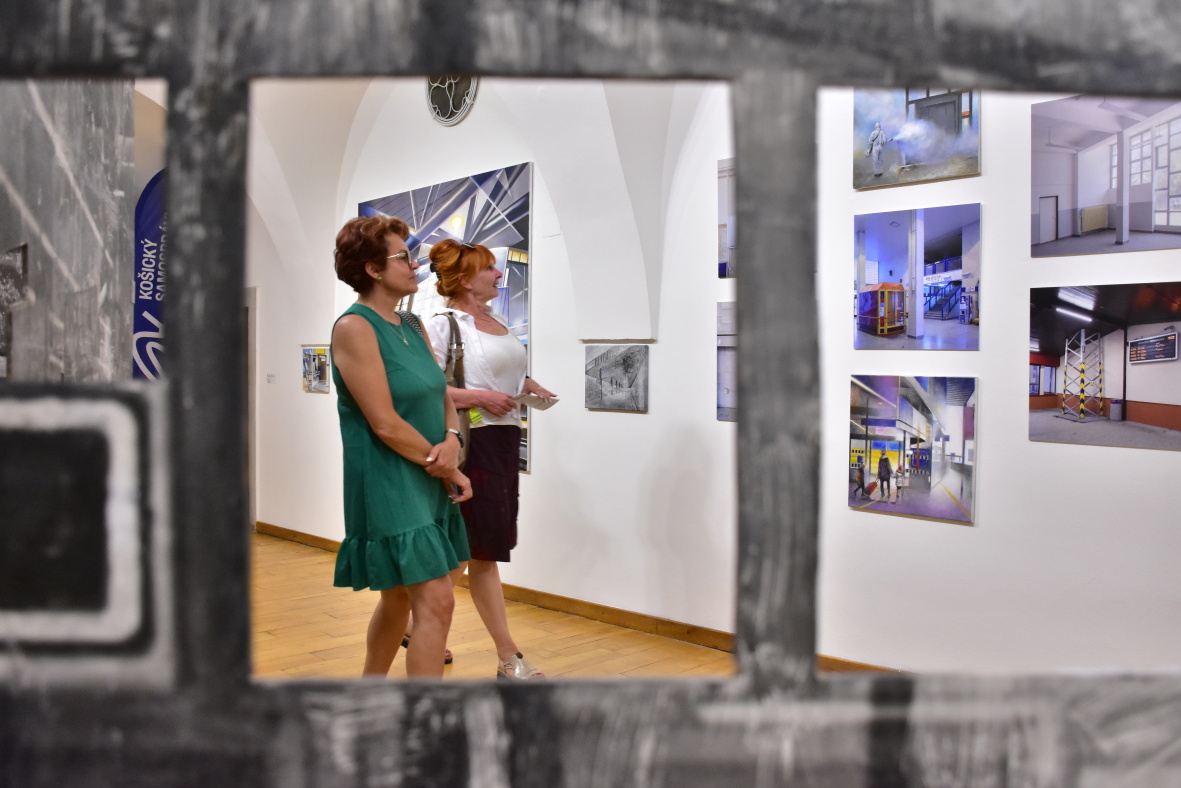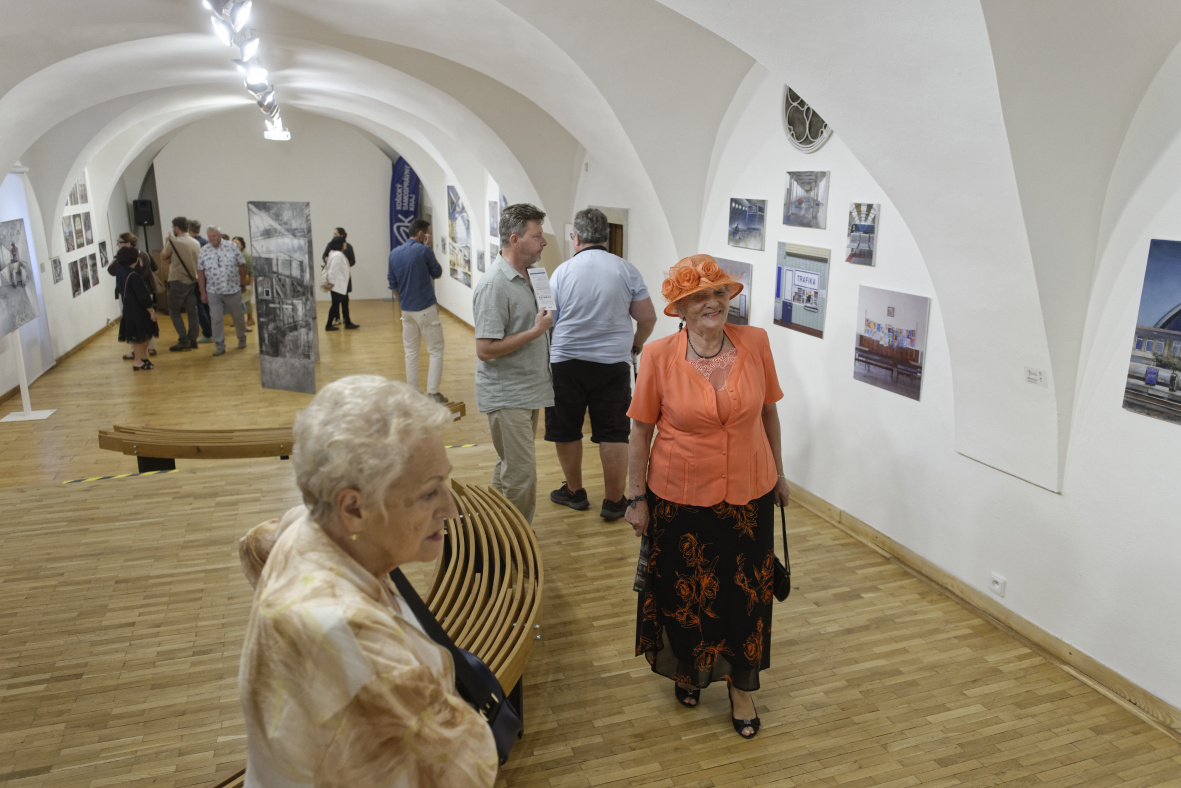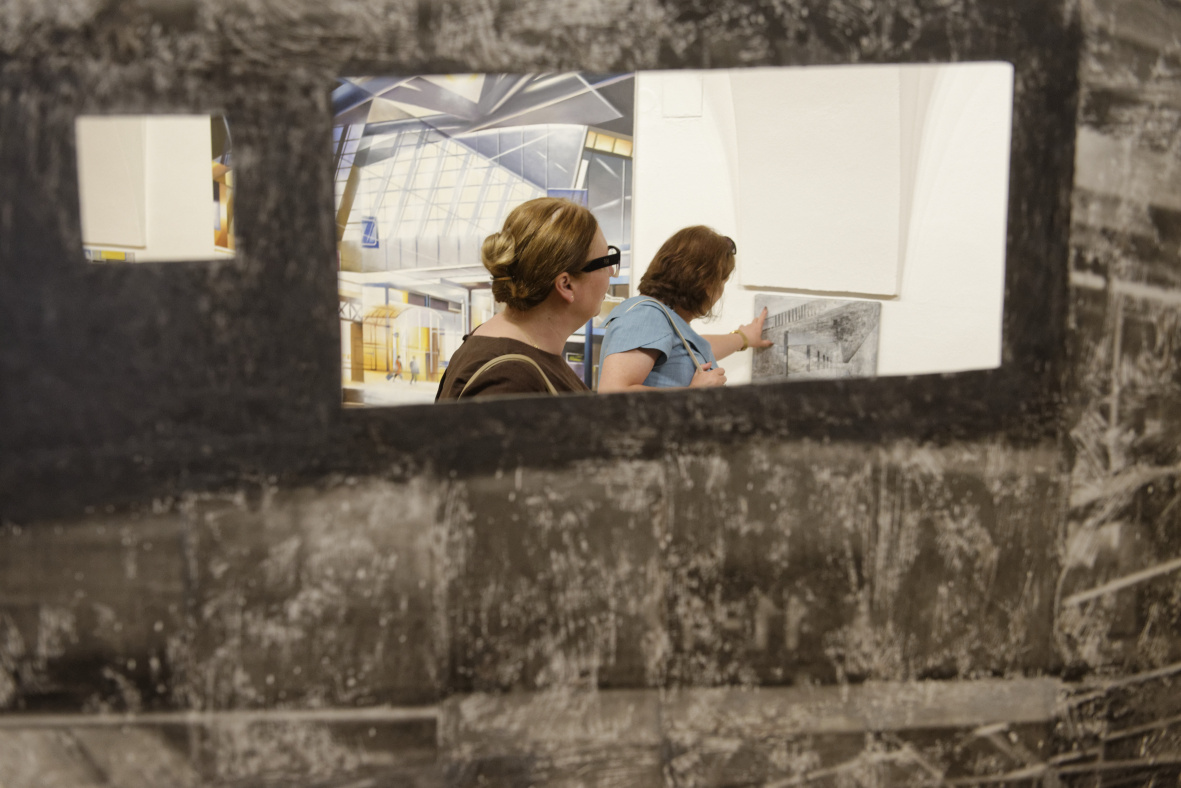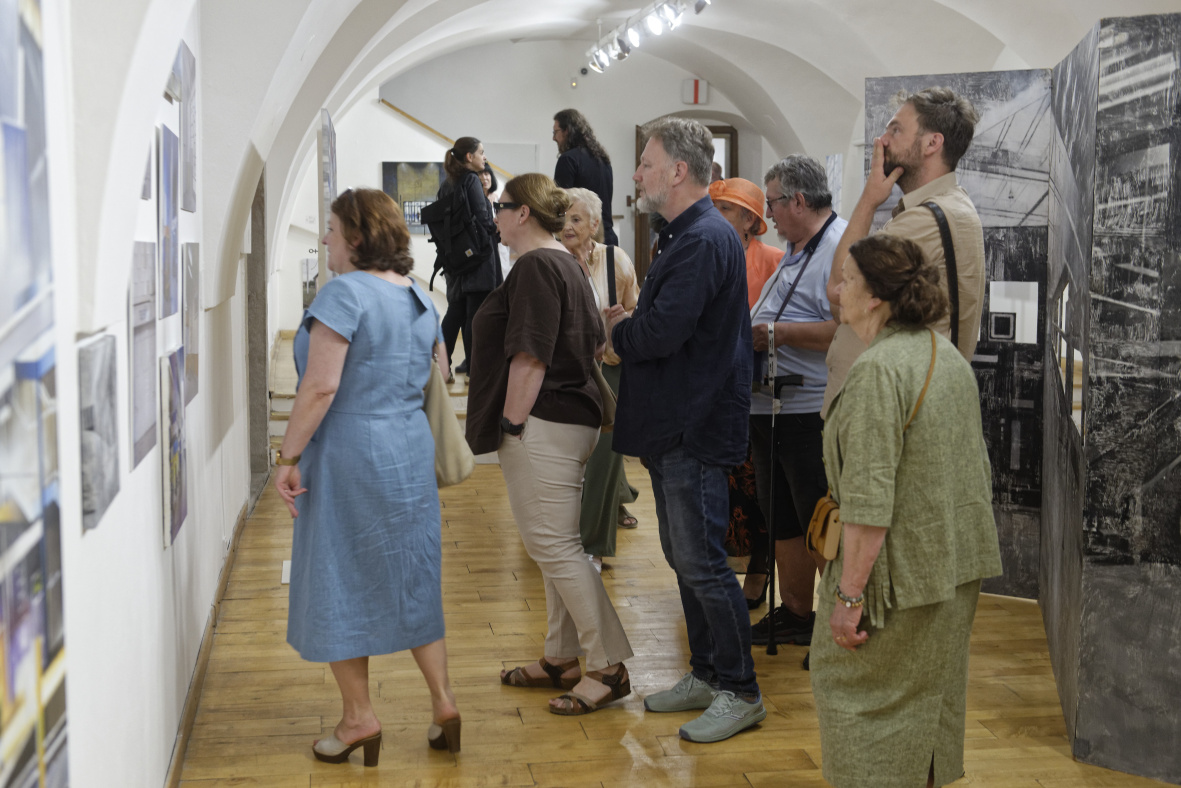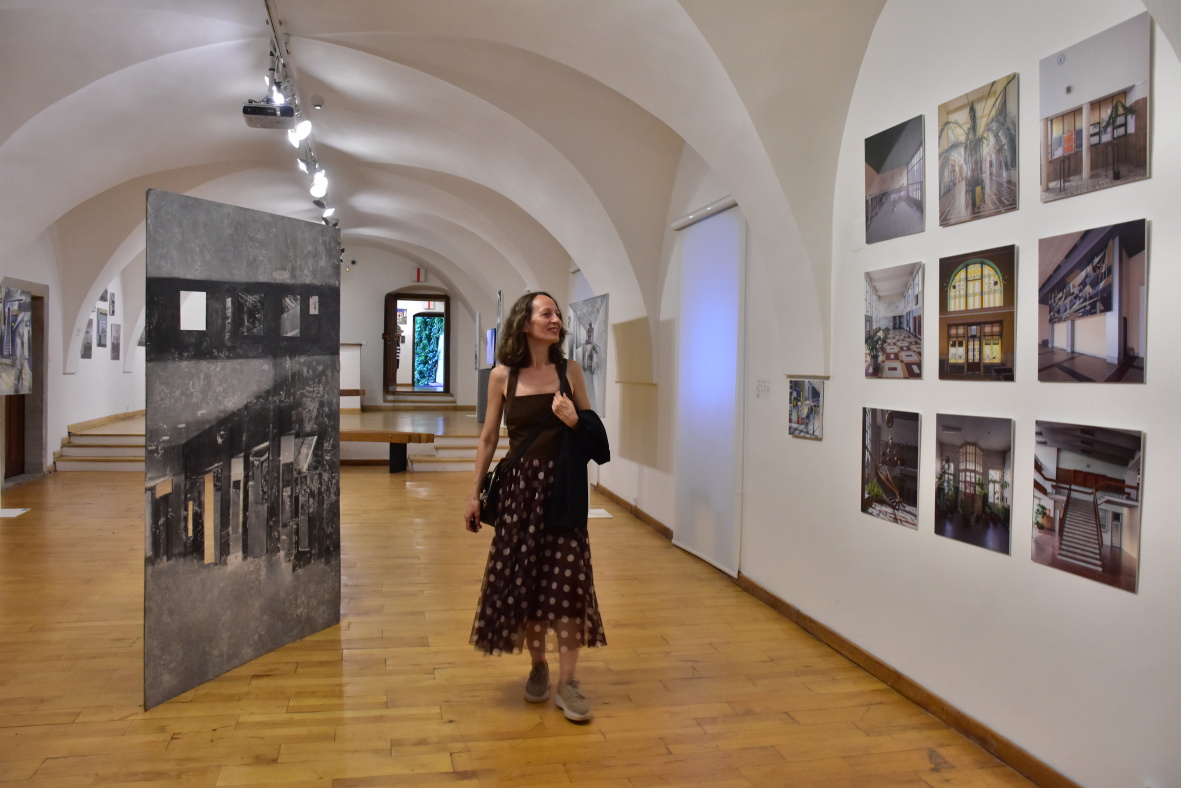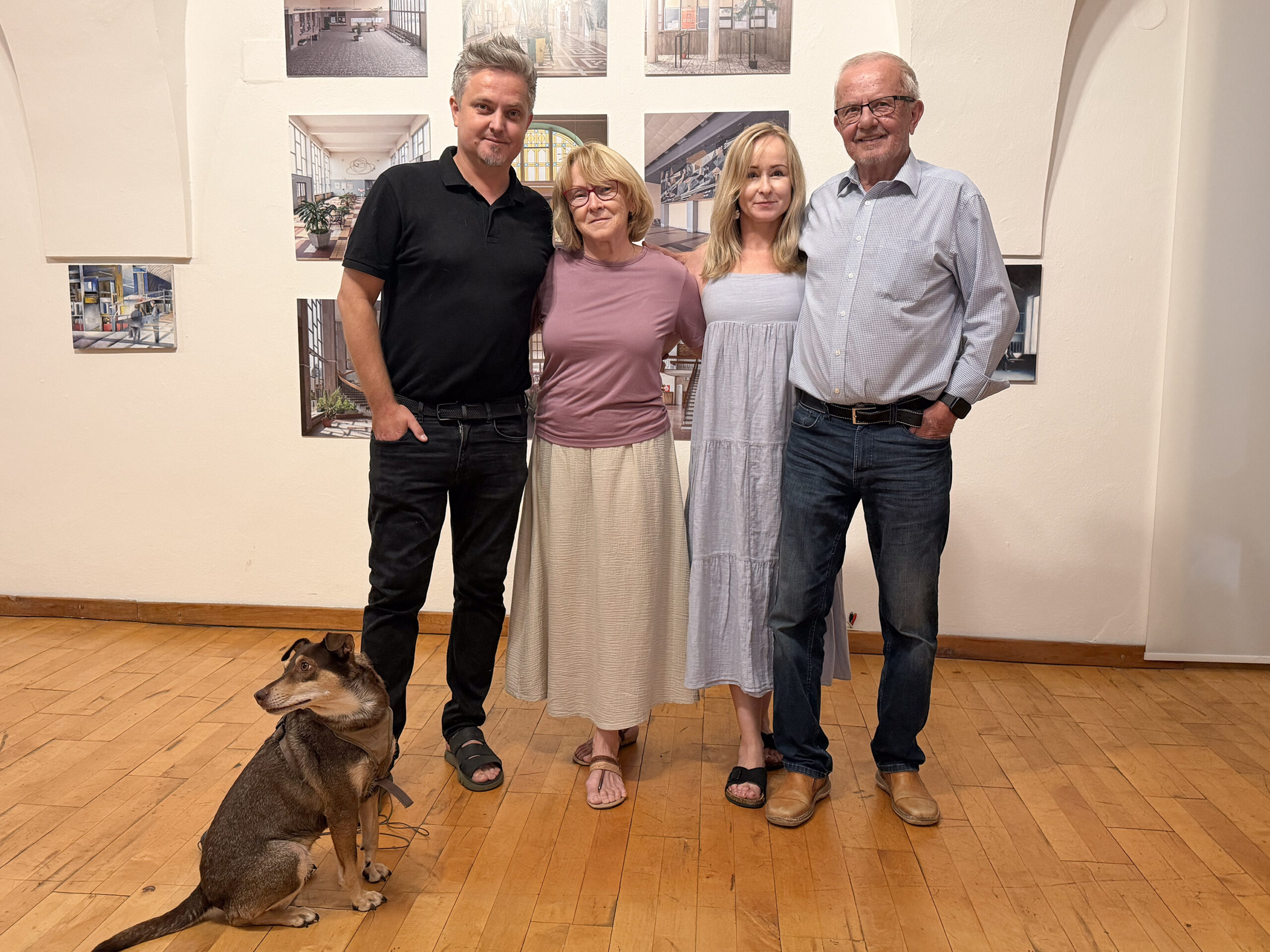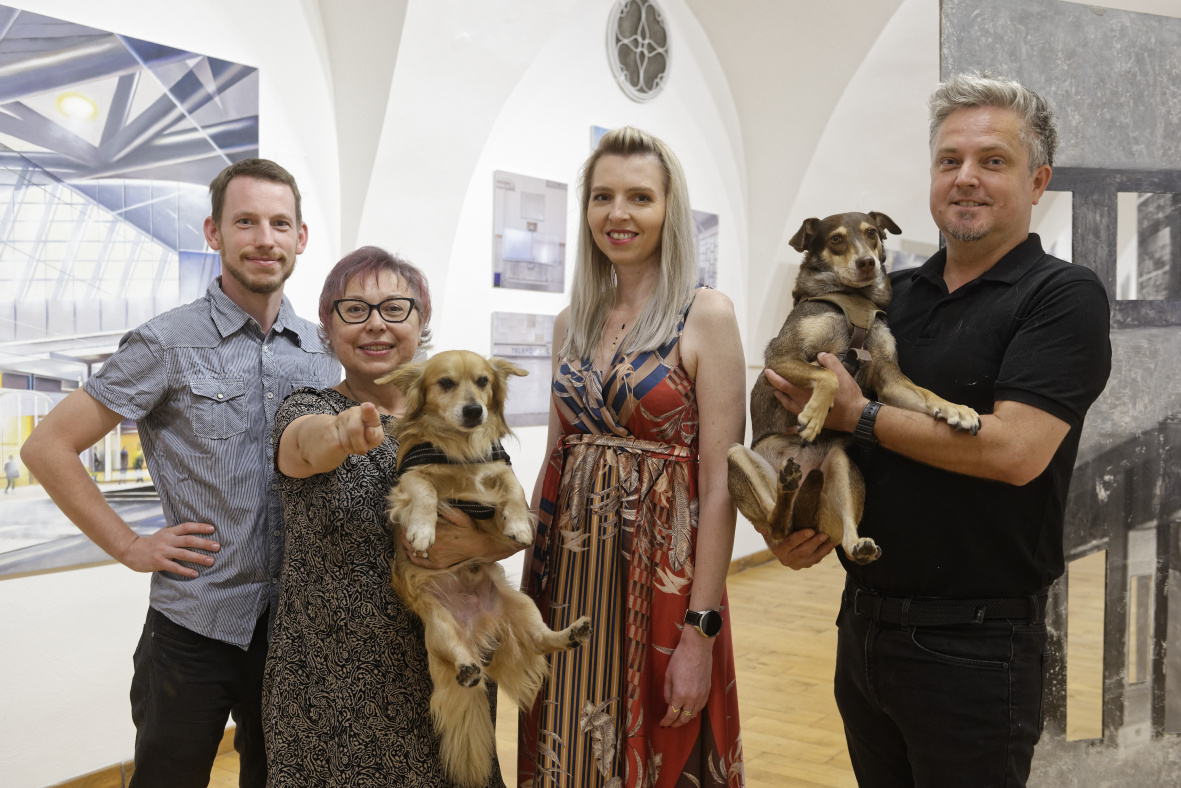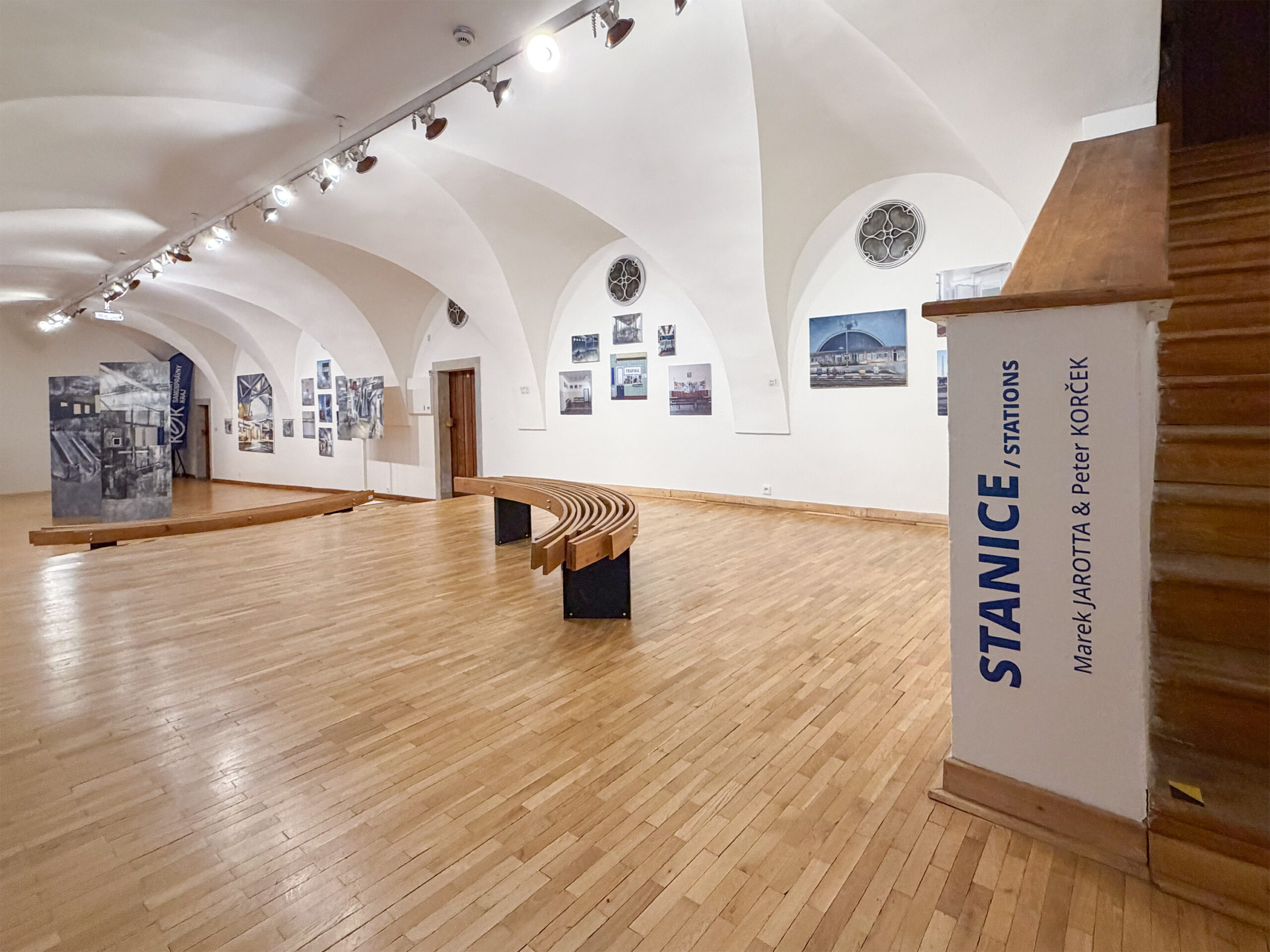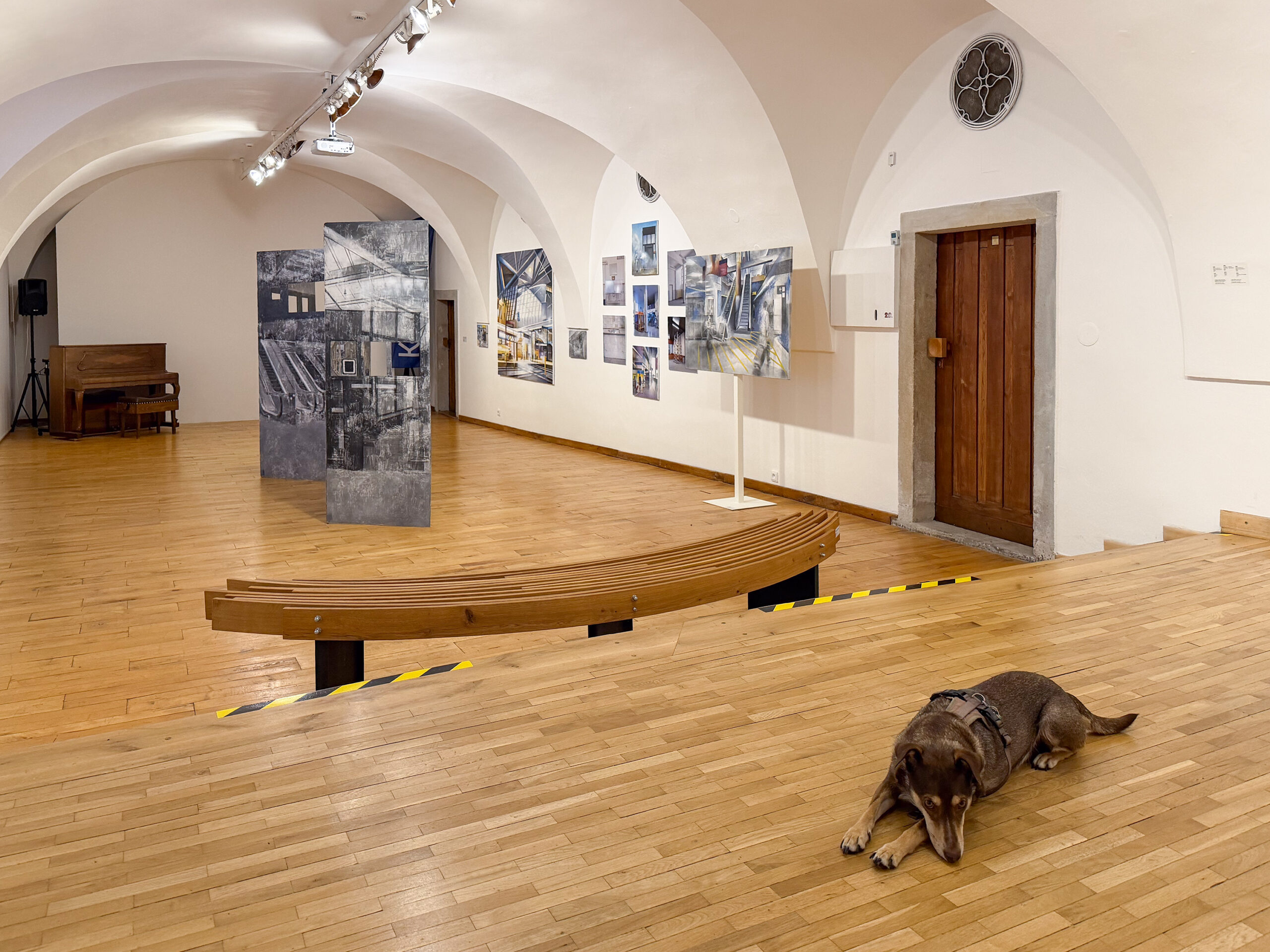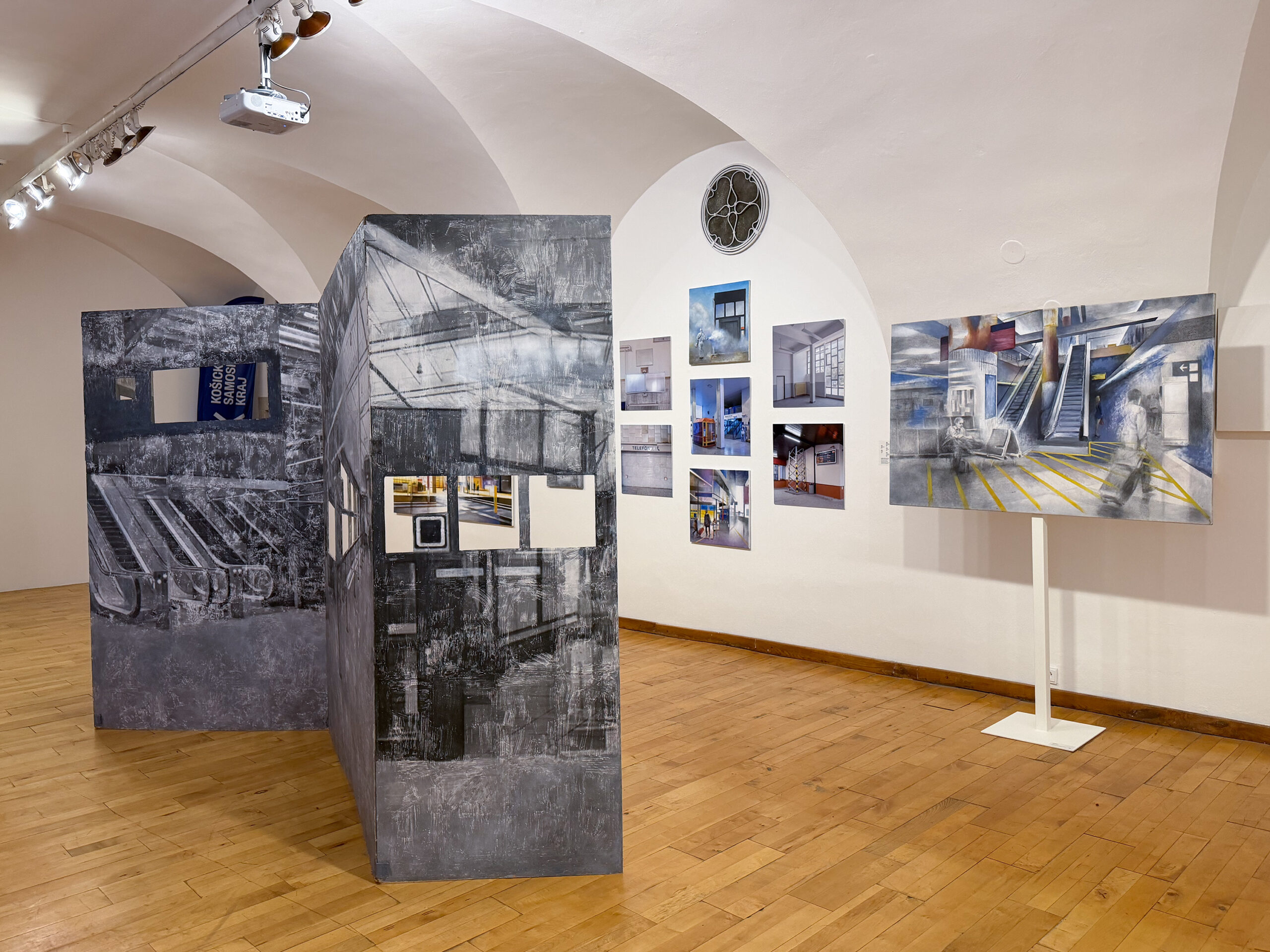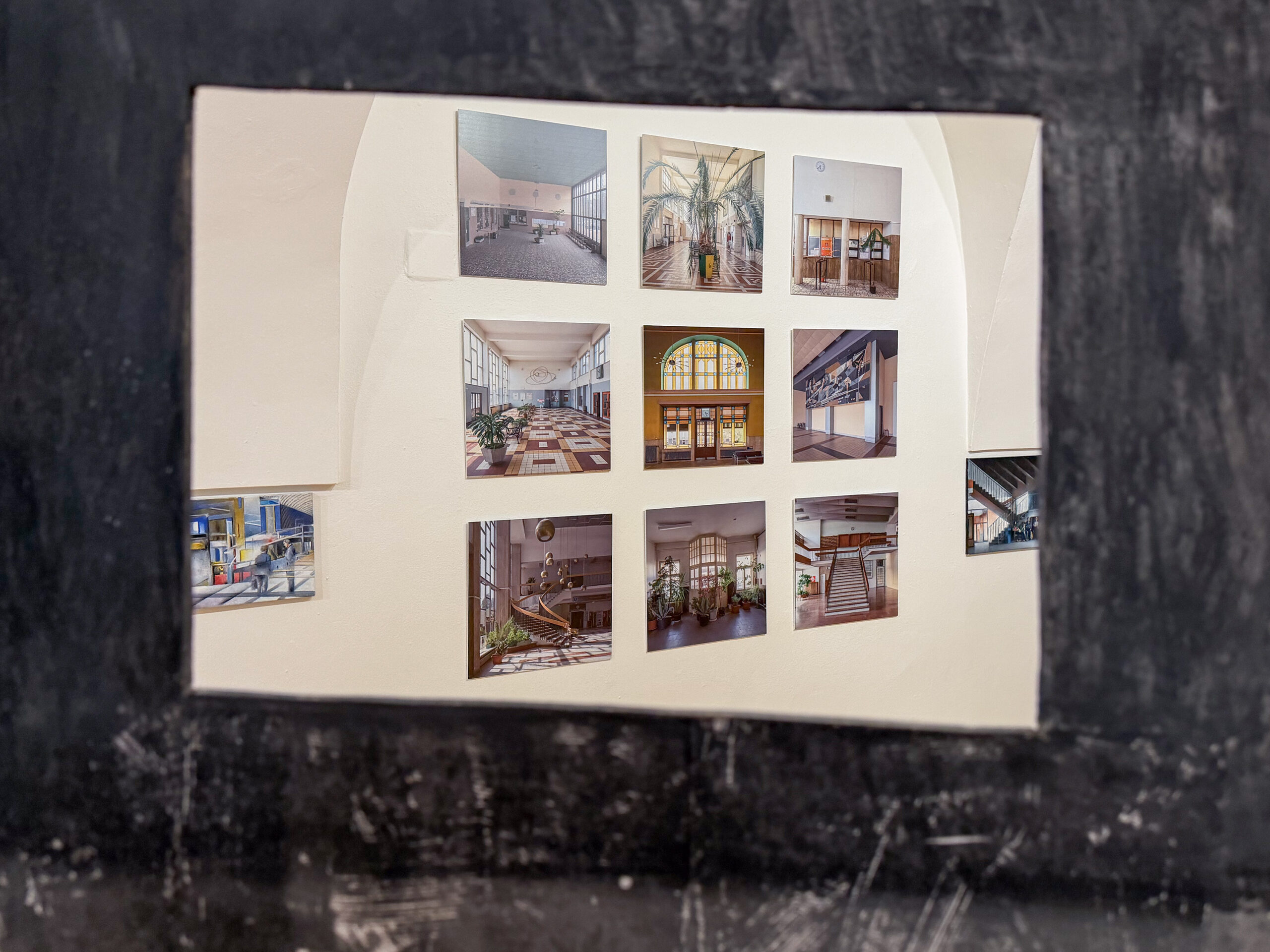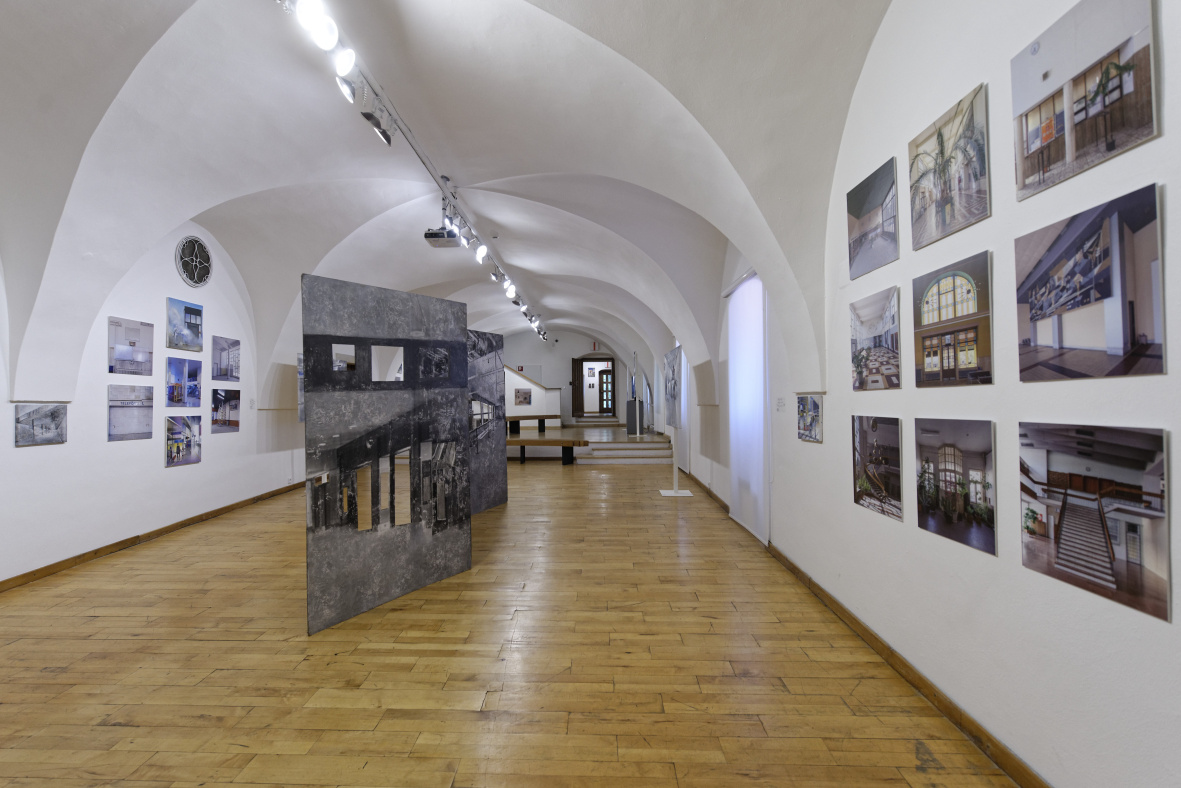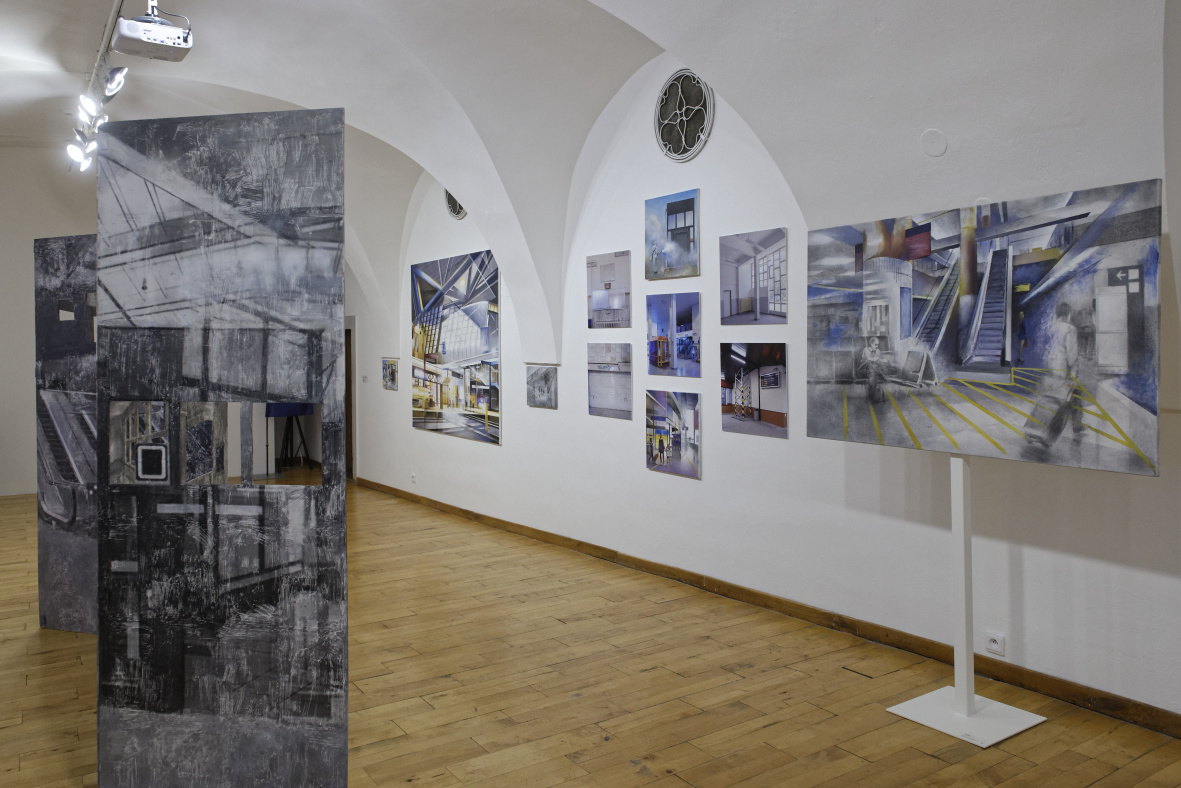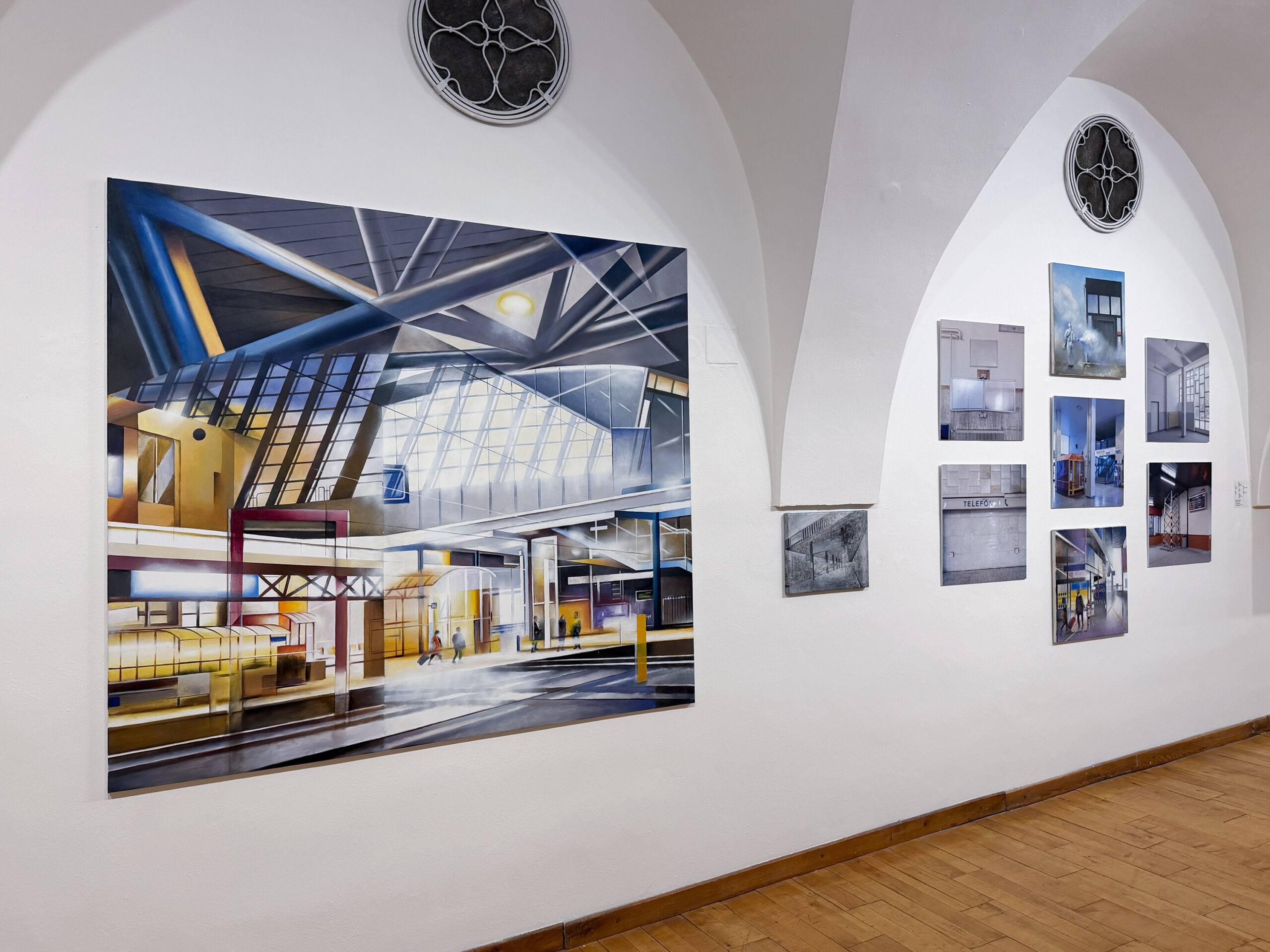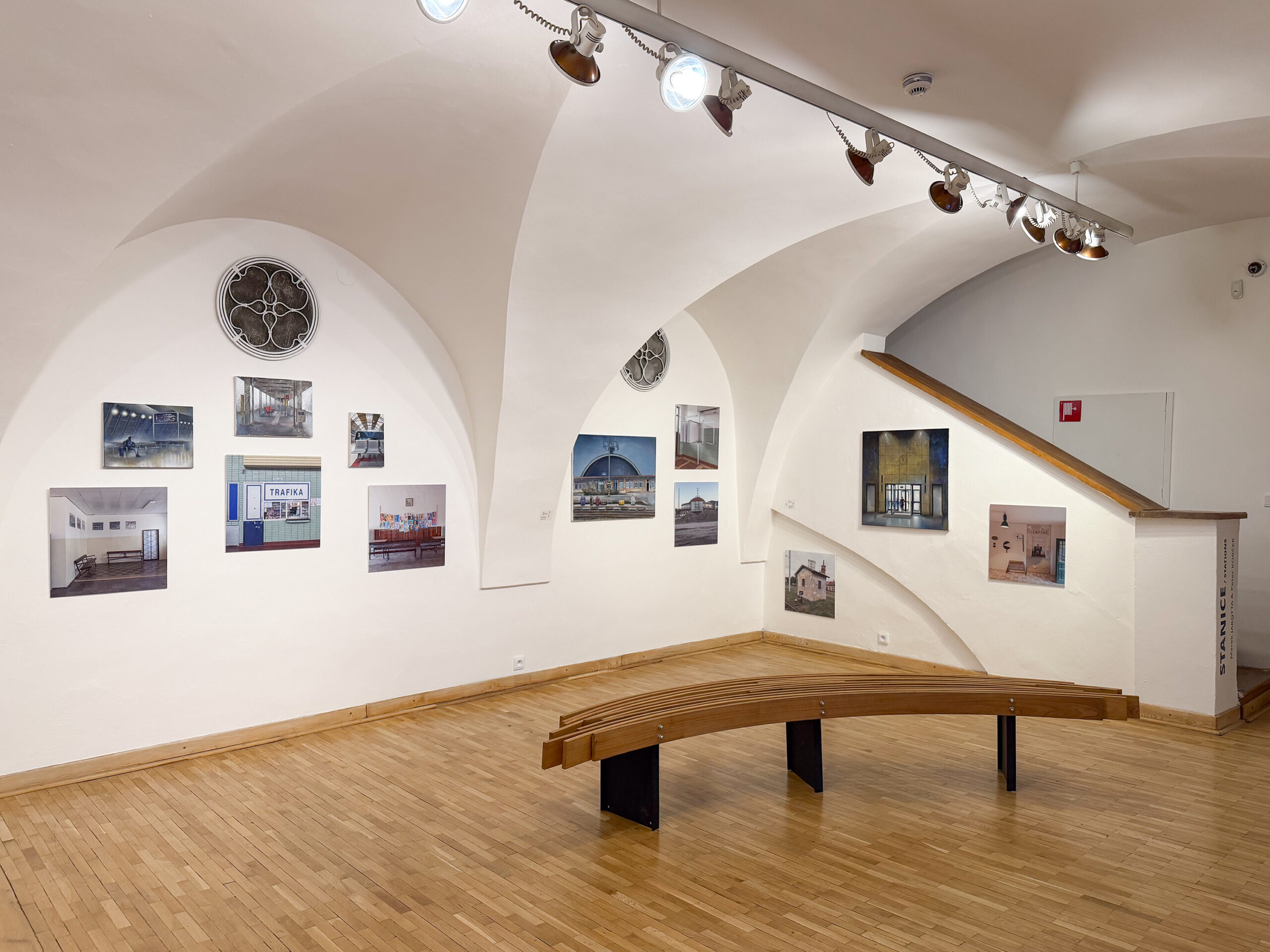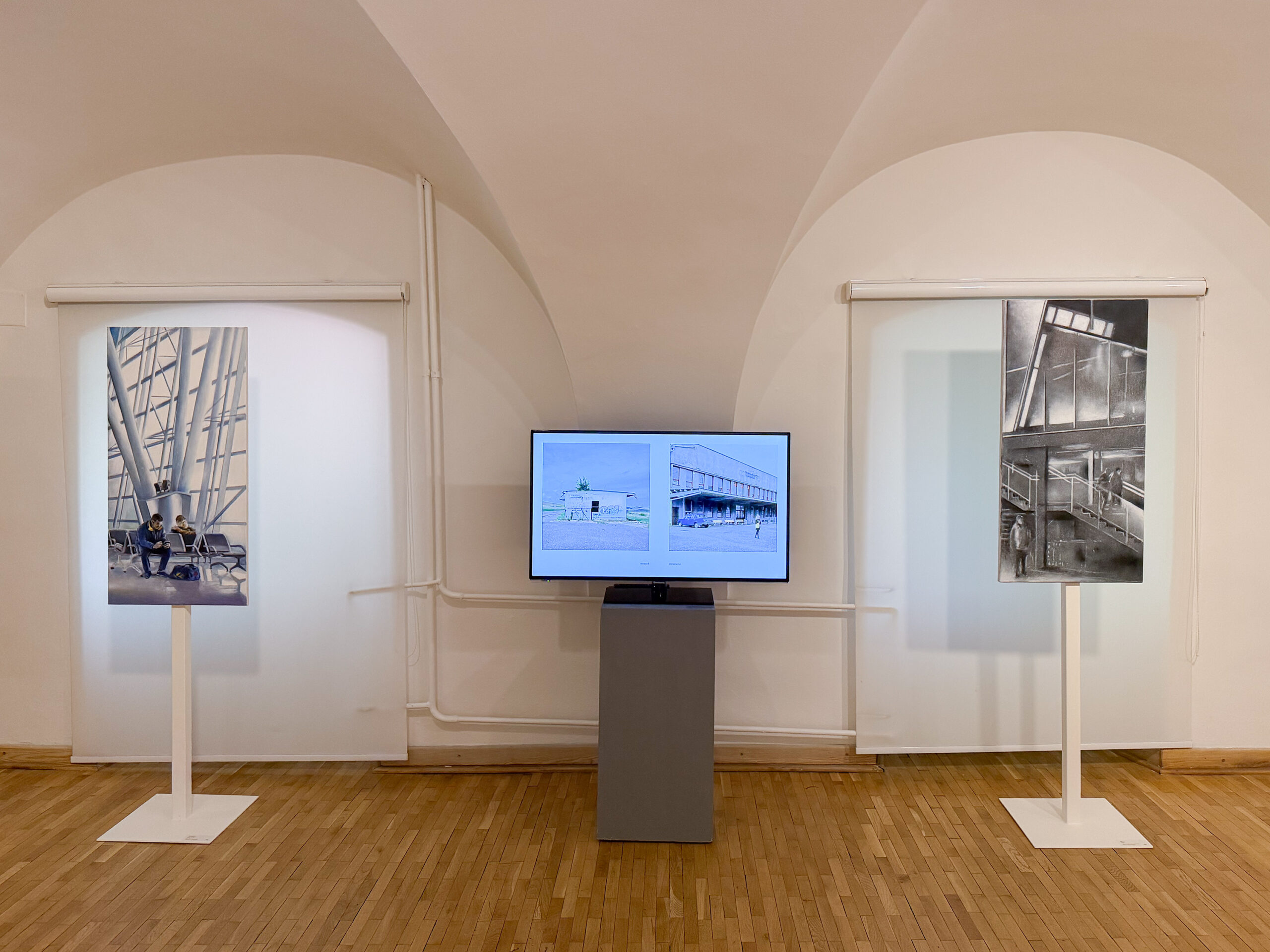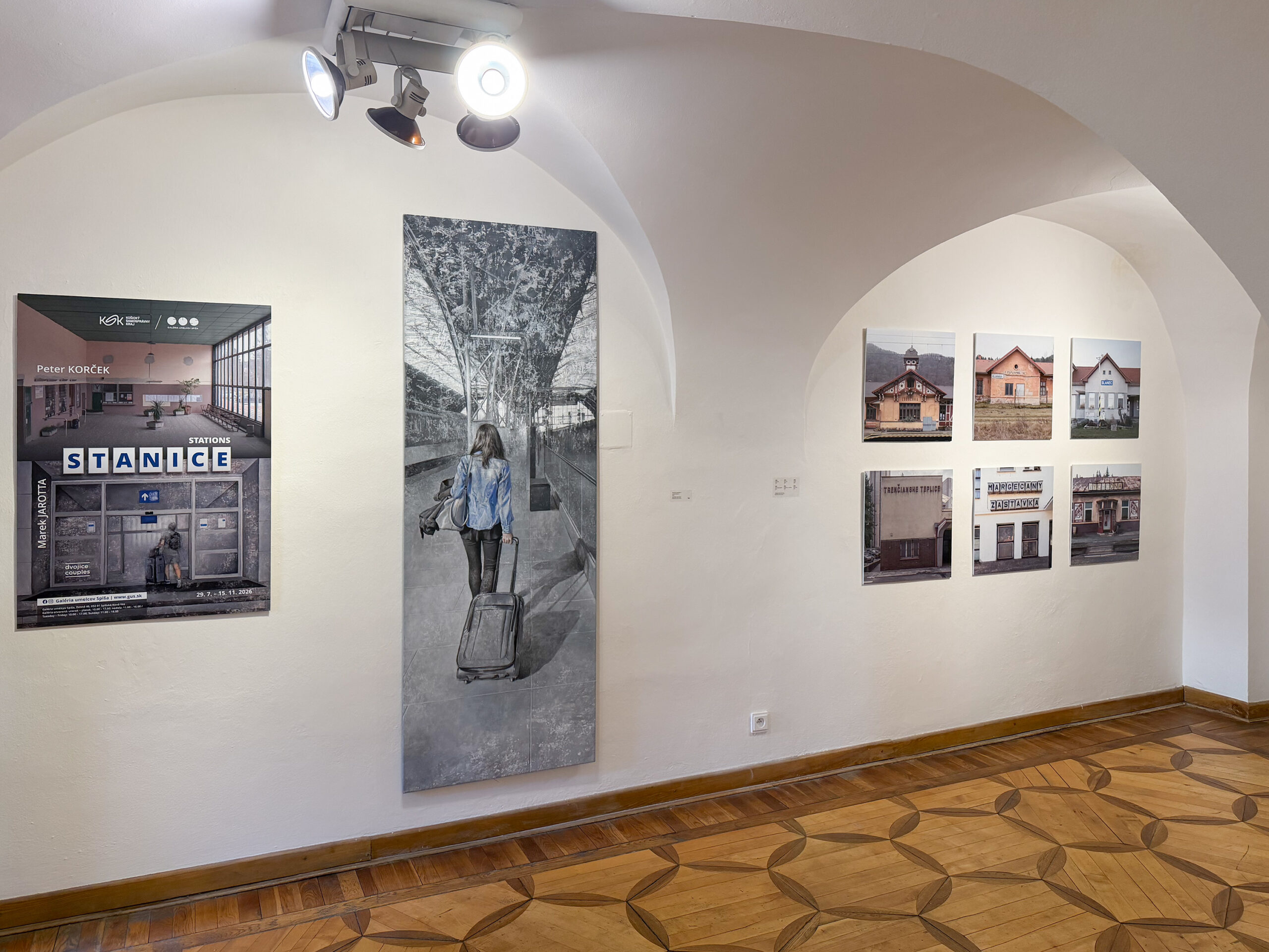
The premiere of the exhibition STATIONS: a dialogue of paintings and photography exploring the phenomena of transience and aesthetic quality. For the first time, Jarotta’s paintings reflecting on the modern-day nomads who roam waiting rooms and departure lounges are exhibited in combination with Korček’s photographs, a visual testimony to the disappearing world of outdated railway stations. Part of the Couples cycle of exhibitions.
_____
The idea of STATIONS as fascinating nodal points with hidden visual qualities has been an enduring source of inspiration in the work of the artist Marek Jarotta and the photographer Peter Korček. The creative dialogue between the two artists builds indirectly on their focus on recording the fleeting moment and the singularity of fabricated environments.
Artistic depictions of railway stations date back to the Victorian period of the 19th century, with artists drawing inspiration from platforms and waiting rooms – those remarkable examples of incessant movement, the perfect union of architecture and art. Large-format art played a crucial role in the railway stations of the postwar era, and these monumental works remains inextricably linked with the architecture and ideology of the period. Taking various forms, including reliefs, sgraffito, stained glass and mosaics, the artworks transformed these “railway cathedrals” into open-plan art galleries which bore witness to the rhythms of the age, combining utility with contemporary aesthetics. In the worlds of Slovak fine art and photography, Jarotta and Korček are essentially peerless; their highly idiosyncratic styles and ongoing interest in their chosen theme enables seemingly endless variations of the motif of the station, each with its own unique content and formal statement.
_____
Marek Jarotta describes his artistic approach as an inquiry into the psychological and physical experiences of the individual amidst the modern transit space. “My interest lies in the ‘liminal’ state – the moments of waiting, transfer, the loss of individuality when we are subsumed into the crowd. I see these states as intersectional, the point at which human identity becomes fluid, and we are transformed into a purely functional unit (either as a traveller or when waiting). Drawing on the psychology of the mind, I explore the ways in which architectural homogeneity and the joyless functionality of the built environment can affect our perception of reality. The figures in my work are often devoid of detail, blurred or dissolving into the texture of the background. They are little more than echoes of presence in a space that has been designed to ensure efficient transit; for transience rather than permanence.”
Curriculum Vitae | Marek Jarotta (*1988, Ružomberok) studied under doc. Klaudia Kosziba at the Studio of Painting of the Academy of Fine Art and Design in Bratislava. His work has featured in numerous solo and group exhibitions both in Slovakia and abroad (Italy, Bulgaria, USA, CZ) and is regulary in contention for the VUB Foundation Painting of the Year Award; he won second place in 2013 and was a finalist in 2016, 2017, 2020, 2021 and 2022. In 2022 he was awarded the Martin Benka Award for Visual Art. Jarotta’s work is represented in several private collections and in the public collections of the Orava Gallery, the Liptov Gallery of Peter Michal Bohúň and the Gallery of Spiš Artists, where he also held a solo exhibition in 2021 titled Transit. He lives and works in Banská Bystrica and Ružomberok.
_____
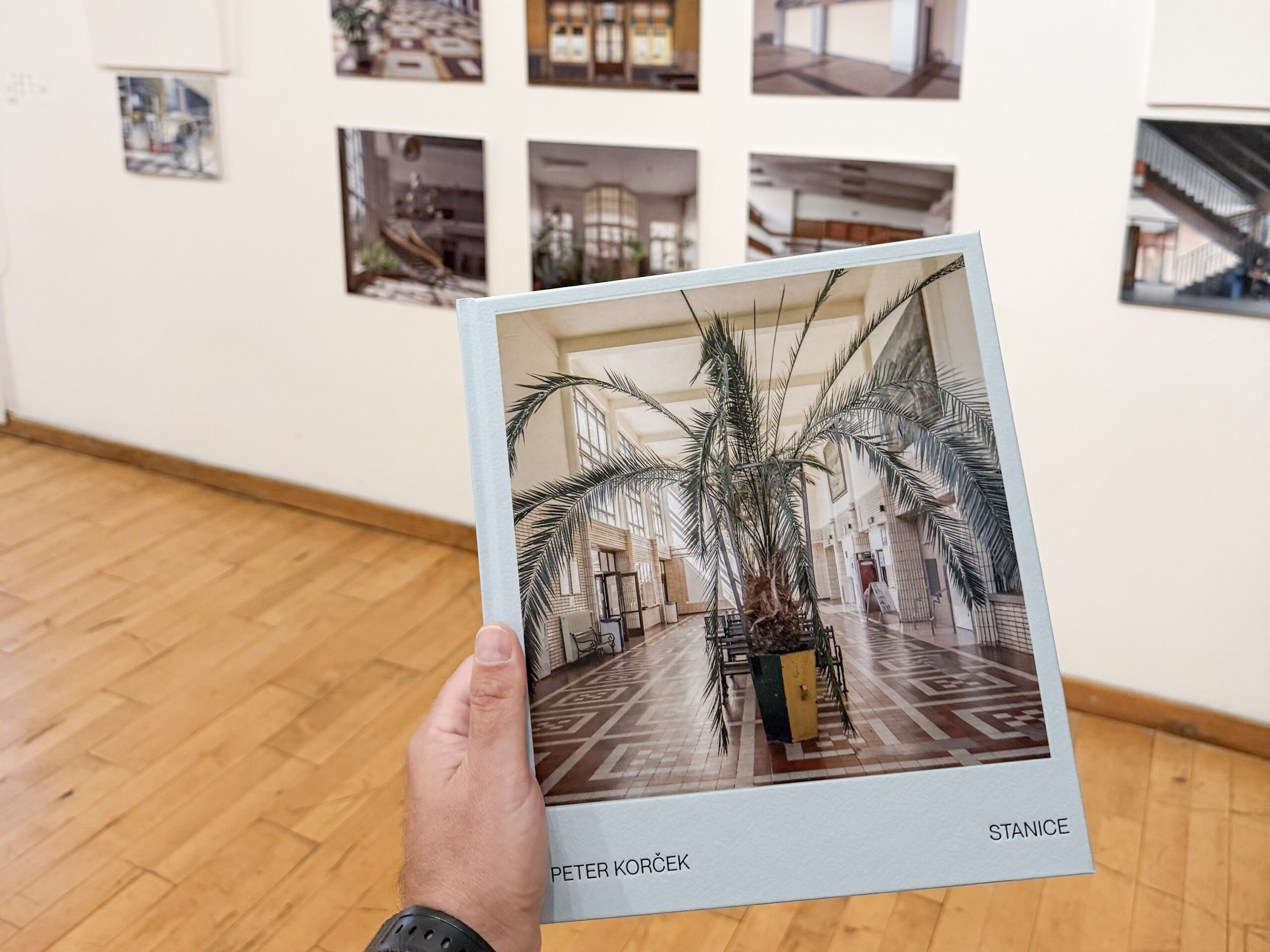
Peter Korček has been photographing stations since 2010; one outcome of his work is his publication of the same name which showcases 151 of his photographs taken in 54 railway stations around Slovakia, a remarkable documentary and historical survey. During his “adventurous expeditions”, he captures the transformations undergone by the vanishing, shifting or lingering worlds of these stations, drawing attention to wry exaggerations that accentuate the sheer eccentricity of their environments. As the artist says: “Sometimes we have the feeling that time is standing still in these halls. Just like us, these stations have to struggle for their own identity. Subjected to botched, yet often well-intentioned interventions, they adapt to the megalomania of their architects, forging their own way through life, often by the skin of their teeth. The exceptional and unique architecture of these buildings is gradually being lost and overwhelmed beneath the onslaught of visual smog, shoddy reconstructions and the encroachments of floral still lifes.”
Curriculum Vitae | Peter Korček (*1980, Gelnica) is a documentary photographer. He is an external lecturer at the Institute of Creative Photography at the Faculty of Philosophy and Science at the Silesian University in Opava, where he completed his doctoral studies in 2024. He also works as marketing manager at the Czech Centre Bratislava. For more than fifteen years, he has also worked as a photojournalist for various Slovak publishers, and he has also produced work for commercial clients and charitable organizations. He devotes his free time to documentary photography, focusing on the constant changes undergone by the landscape, exploring both the positive and negative aspects of the intensifying urbanization wrought by humankind. His work has been exhibited both at home and abroad, and he has won several prizes at the Slovak Press Photo and Czech Press Photo Awards. Korček’s photographs also feature in the collection of the Museum of Modern Art in Olomouc (CZ). He lives and works in Bratislava.
Mgr. Lucia Benická – GUS,
exhibition curator
Curator: Mgr. Lucia Benická – GUS
Production: Mgr. Lucia Benická, Mgr. Mária Šabľová – GUS
Graphic design: Mgr. art. Ivana Babejová, ArtD. – GUS
Translation: Bc. Gavin Cowper
Opening of exhibition
29. 7. 2026 at 5:00 PM
Venue
Galéria umelcov Spiša
Zimná 46, Spišská Nová Ves
Duration date
29. 7. – 15. 11. 2026